



Why NextShapes PLA CF Filament Became the Perfect Choice for a Leading Outdoor Cycling Gear Brand
 2026.06.01
  NextShapes,PLA CF,3D Printing
  <1 minute



Outdoor cycling gear, especially helmets, demands extremely high material performance: it must be lightweight, stiff, and impact-resistant. During product development, safety certification testing, and professional rider feedback cycles, the product development team of a well-known outdoor cycling brand relies heavily on 3D Printing to create accurate prototypes and evaluate design options. These evaluations include drop tests, prolonged UV exposure tests, and fit assessments for different head shapes.
One product development manager at the brand is responsible for helping engineers design testing protocols, optimize helmet structures, and select suitable FDM 3D printing materials—ensuring helmets are both protective and comfortable. For prototype validation and small-batch production, choosing the right filament often determines how smoothly design iterations can proceed. Ultimately, the team selected NextShapes PLA CF (3D printed carbon fiber reinforced PLA) to replace traditional machined components in a new lightweight helmet project.
About the Outdoor Cycling Brand
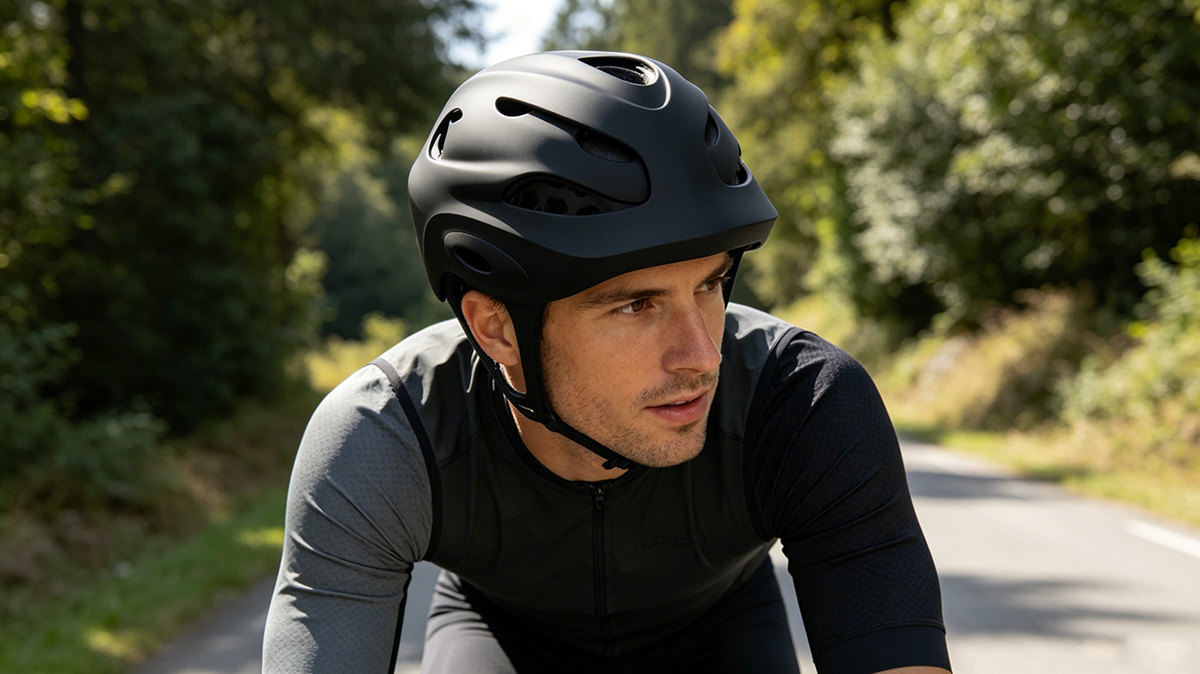
The brand’s R&D workshop is always buzzing with exciting projects. The manager recalls a study on helmet ventilation performance at varying cycling speeds, where 3D printing for product design was fully integrated into testing.
“We needed helmets that stay cool at 30 km/h yet remain dimensionally stable under sudden impacts. Traditional CNC-machined prototype vents were slow to produce and wasteful of material. By using NextShapes PLA CF for 3D Printing, we were able to print a complete helmet shell with internal airflow channels in a single piece. The material’s stiffness ensured the vents retained precise shapes during airflow testing, and the 15% carbon fiber content gave a premium matte finish with almost no visible layer lines. This was a huge leap for us,” the manager explained.
Serving a user base ranging from urban commuters to mountain bikers, the brand faces diverse product requirements.
“For our road racing helmets, minimizing weight and air resistance is crucial—every gram counts. For endurance mountain bike helmets, we add extra reinforcement at the rear and temple areas. PLA CF offers enough rigidity to simulate these reinforcements without metal inserts. We also use it to print custom padding and visor mounts. The filament doesn’t creep under continuous load, so visors stay securely in place. Plus, because it prints easily on our existing FDM 3D printing materials, we didn’t need to invest in specialized equipment,” the manager added.
Why the Brand Chose NextShapes PLA CF
The team had been searching for a material that could improve both prototype surface quality and mechanical performance. They previously tried regular PLA and ABS—PLA lacked sufficient stiffness, and ABS had pronounced layer lines and required extensive post-processing. Small-batch machined nylon was also tested, but costs and lead times were too high to support rapid iteration.
They ultimately chose NextShapes PLA CF, which is compatible with most FDM 3D printing materials on the market.
“We printed identical helmet visor mounts—one in regular PLA, one in PLA CF. The difference was immediate. Regular PLA began to warp under a 5 kg load after 24 hours, while the PLA CF part remained perfectly intact. Surface quality was worlds apart. The carbon fiber effectively hides layer lines, giving the part an injection-molded appearance. This is critical for client-facing validation prototypes, and even for small-batch custom helmet components produced via 3D Printing,” the manager said.
For outdoor cycling gear, long-term durability is essential. Helmets are exposed to sunlight, sweat, and temperature changes.
“We need a filament that maintains stiffness over time—without becoming brittle or warping. PLA CF contains 15% carbon fiber, achieving a bending modulus comparable to glass fiber reinforced nylon, but it is much easier to print. We conducted a 500-hour UV exposure test on PLA CF helmet spoilers (simulating summer riding) and observed no measurable deformation, with impact resistance remaining within acceptable ranges. This is why we now use it not only for display models but also for functional prototypes on test bikes,” the manager emphasized.
Another often overlooked benefit is ease of assembly.
“A helmet consists of multiple parts—shell, liner, retention system, vent inserts. With PLA CF, components snap together crisply because the material is stiff yet sufficiently tough, preventing cracks at the clips. Compared to ABS, our rework rate dropped nearly 40%. And because layer lines are minimized, we don’t need sanding or priming before showing parts to clients or test riders. This alone saves several days of post-processing per prototype produced via 3D Printing,” the manager added.

Read More>
Next Steps for the Brand
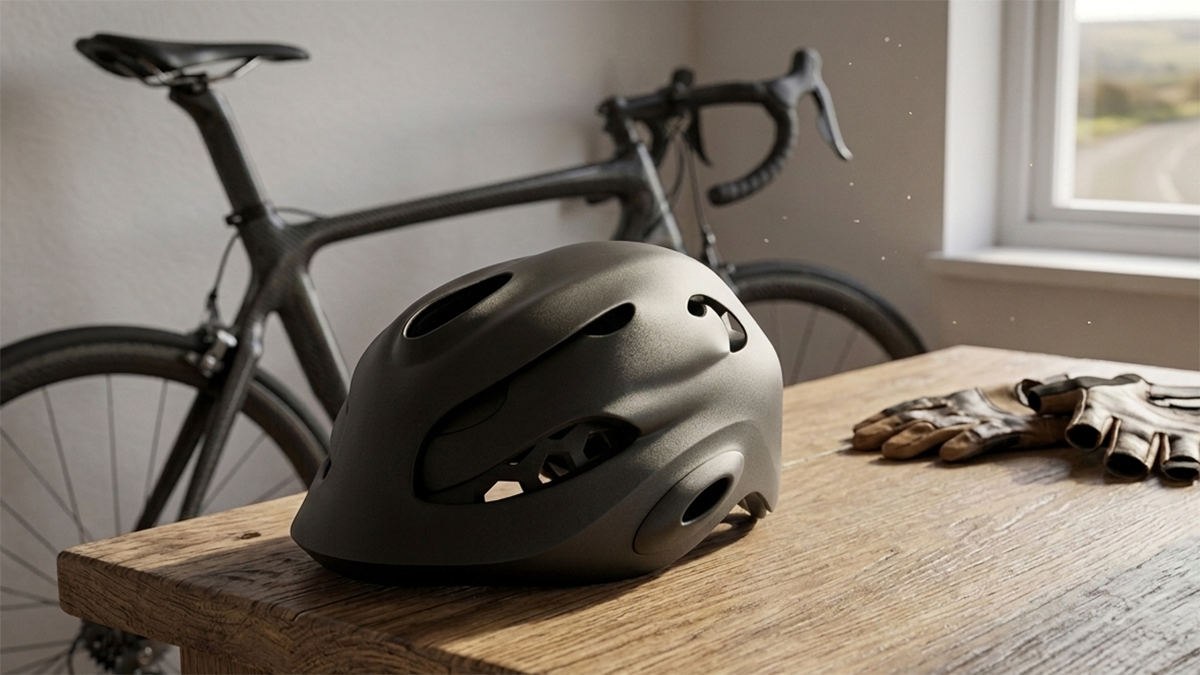
The manager believes the applications of NextShapes PLA CF extend beyond helmets. The workshop recently added two more FDM 3D printing materials printers and is exploring PLA CF for other outdoor cycling gear.
“We’ve already started printing light mounts, action camera bases, and replacement rear derailleur guards for gravel bikes. The material’s excellent stiffness-to-weight ratio ensures components remain precisely aligned under vibration. The matte carbon fiber finish also matches the aesthetic of high-end carbon frames. Our product team is currently evaluating PLA CF for short-run, custom helmet liners—a task that previously required outsourcing to injection molders with long lead times,” the manager said.
“The combination of high stiffness, excellent surface quality, and easy printability makes it nearly a perfect choice for any outdoor cycling application requiring strength and aesthetics, whether for 3D Printing, filament, or 3D printed custom components.”