



NextShapes Produces Smooth FDM Printed Models With Matte PLA Filament
 2026.06.10
  NextShapes,Matte PLA,3D Printing
  <1 minute



FDM 3D printing is a widely accessible additive manufacturing method used for design verification, educational teaching, art creation, and small-batch model production. It is favored by design studios, schools, individual creators, and brand R&D teams for its low entry cost and flexible production logic. However, ordinary standard PLA filaments often have obvious layer lines on printed surfaces, with overly glossy finishes that ruin the delicate texture of finished models. Conventional pla filament for 3d printing also struggles with jamming and unstable extrusion under high-speed printing parameters. Many creators and institutions hope to obtain a universal printing material that balances beautiful surface effect and stable printing performance, yet most common filaments cannot meet this comprehensive demand. Fortunately, matte PLA filament developed for FDM printers provides a perfect alternative to ordinary glossy PLA.
NextShapes, a professional 3D printing material developer focusing on consumer and educational-grade filament, optimizes the overall printing experience by developing exclusive Matte PLA filament, eliminating multiple pain points of traditional FDM printing materials, and bringing excellent texture finished parts to all types of users. By developing self-formulated Matte PLA filament for 3d printing for universal FDM equipment, NextShapes greatly lowers the threshold of high-texture model making, while maintaining outstanding printing stability and compatibility. With NextShapes Matte PLA filament, users can create delicate matte-finished 3D printed works easily, improve printing efficiency, and save post-processing polishing time significantly.


Brand Clients Show Broad Demand for High-Quality FDM Filaments
NextShapes serves numerous cooperative partners covering design studios, educational institutions, and creative product development sectors. The team completes material matching testing for partners, verifies print parameter adaptability, iterates printing samples rapidly, and delivers batch sample printing services to support clients’ 3d printing for product design work. The enterprise mainly focuses on FDM consumable development and the application of 3D printed models in daily creation and teaching scenarios.
From campus laboratory projects to commercial creative product prototypes, demand for high-performance PLA filament remains consistently strong. NextShapes has accumulated rich material development experience through long-term market practice.
“FDM 3D printing puts forward comprehensive requirements for both material surface performance and printing stability. To deliver satisfying finished 3D printed models to users, you need to deeply understand the matching characteristics of filaments and printers. If you adopt ordinary pla filament for 3d printing without targeted material optimization, users will frequently encounter layer texture defects, print jams, and compatibility failures, bringing lots of extra post-processing work and unpredictable printing troubles,” said the general manager and founder of NextShapes.
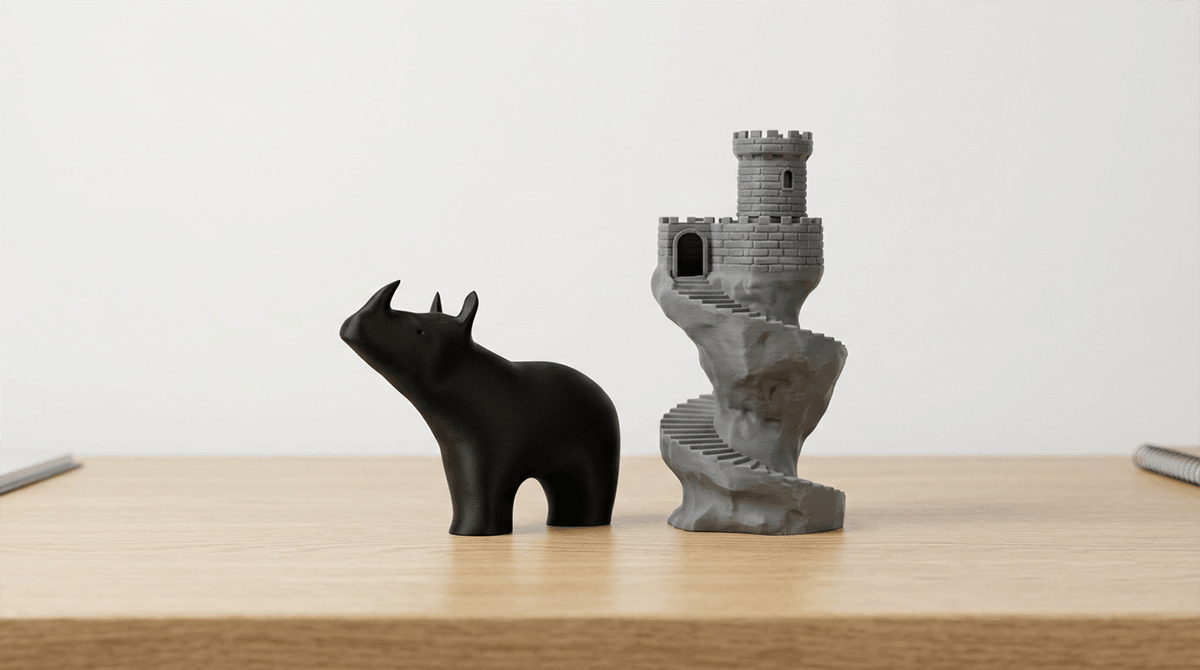
How to Integrate Matte PLA Into Daily FDM Printing Workflow
By adopting NextShapes Matte PLA filament, users can avoid tedious parameter debugging and frequent equipment maintenance work, greatly simplifying the whole printing process. This material achieves higher printing automation and fewer manual interventions. NextShapes’ all-matching, easy-to-use Matte PLA series allows new and veteran printing users to start high-quality matte model production quickly.
“Printing tasks with this matte pla filament for 3d printing can run continuously with minimal manual supervision. Operators do not need to master extremely professional filament debugging skills, though basic FDM 3D printing operation knowledge is still required. The learning cost for new users is greatly reduced, and printing tasks can run unattended for much longer periods,” the manager said.
Many cooperative clients of NextShapes focus on art decorations, teaching demonstration models, and small creative handicrafts. These users need to produce a large number of sample models in short cycles and require materials that support fast printing without sacrificing surface quality. The manager pointed out that rapid sample printing with Matte PLA greatly optimizes the daily workflow of design and education teams.
How NextShapes Matte PLA Enables Efficient, High-Fidelity Printing
Picking a suitable FDM filament directly determines the final presentation effect of 3D printed models, and Matte PLA’s balanced advantages of soft color rendering, stable extrusion, and wide equipment compatibility make it the ideal consumable for daily high-speed 3d printing for product design. NextShapes’ partners need to output a large number of textured prototypes efficiently in a short time, which sets high standards for pla filament for 3d printing performance.
Uniform surface texture is the core pursuit of most model makers, so stable extrusion and delicate surface performance are essential requirements for filaments. Matte PLA is specially optimized to eliminate prominent layer lines on model surfaces, and its soft matte tone can restore the natural texture of creative works. The formula guarantees stable wire feeding under high-speed printing conditions without nozzle clogging or wire breakage, and it maintains consistent dimensional accuracy of 3D printed models during continuous long-time printing. Thanks to these comprehensive performance advantages, users can continuously print dozens of complete models with one roll of Matte PLA filament without frequent interruptions caused by material defects.
NextShapes Matte PLA not only delivers stable dimensional performance and uniform matte texture, but also boasts wider printer compatibility and simpler printing operation compared with ordinary glossy PLA. “How does this matte pla filament for 3d printing perform under high-speed printing parameters and common FDM equipment? Its overall performance far exceeded our expectations… It achieves a stable printing effect that we could not obtain from conventional standard PLA filaments before,” the manager said.
The R&D team only went through one round of formula adjustment to finalize the mature Matte PLA formula, cutting down material testing cycles significantly. “I can print complex creative structures with stable matte surface effects far faster than using traditional glossy PLA that requires repeated parameter tuning,” he said. Although the team did not expect perfectly finished parts in the first round of testing, there was no need for repeated modification of printing parameters after test prints, only simple trimming of the model’s outer edges. “Once we set the matched printing parameters for Matte PLA, we could start 3D printing directly. After we finished printing and inspected the finished models, the surface texture and dimensional accuracy surprised our team—we only carried out one formula test and one print trial, and the material performed perfectly,” the manager said.
In the final analysis, NextShapes’ self-developed Matte PLA filament allows all types of users to produce high-texture design samples efficiently and affordably with mainstream FDM printing equipment. Users can complete filament loading, model printing, effect testing, and design modification within a single day to realize fast design iteration, helping all cooperative partners launch more delicate, creative, and educational 3D printed works to the market.