



NextShapes 405nm LCD/DLP 3D Printing Material Shoe Mold & Head Sculpt: A Specialized Resin for Highly Detailed Shoe Mold and Head Sculpt Prototypes
 2026.06.03
  NextShapes,Shoe Mold & Head Sculpt,3D Printing
  <1 minute


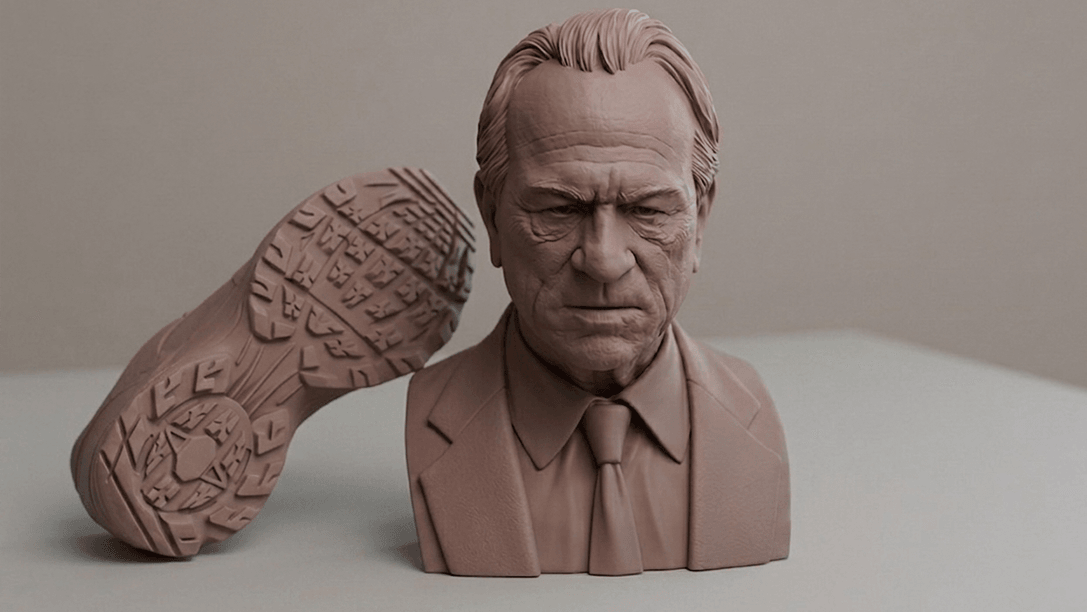
The production of shoe mold and head sculpt prototypes demands exceptional detail reproduction, surface quality, and dimensional accuracy. Traditional hand sculpting is time-consuming and highly dependent on craftsmanship, while CNC machining struggles to reproduce micron-level textures such as outsole traction patterns and facial pores. Although LCD 3D printing technology offers high-resolution manufacturing, ordinary 3D resin materials often suffer from reflective surfaces, blurred detail edges, brittleness during cleaning, and dimensional deformation after processing. For design validation, customization projects, and artistic creation, these limitations can significantly slow development cycles. Fortunately, advances in 3D Printing materials are transforming how highly detailed prototypes are produced.
NextShapes has introduced Shoe Mold & Head Sculpt, a specialized 405nm LCD/DLP 3D resin engineered specifically for shoe mold and head sculpt applications. Featuring a coffee-brown color and naturally matte finish, this material delivers exceptional detail visibility, fine texture reproduction, dimensional stability, and easy cleaning. It is suitable not only for creating final 3D printed prototypes but also as a master pattern for silicone molding and low-temperature thermoforming.

The Urgent Need for High-Detail Materials in Shoe Mold and Head Sculpt Prototyping
Demand for highly detailed shoe molds and head sculpts continues to grow across industries ranging from footwear development to collectibles and 3d printing for product design. Whether reproducing intricate anti-slip patterns on athletic shoe soles, biomimetic textures on uppers, or facial features on 1/6-scale collectible figures, designers require prototypes that accurately reflect their digital concepts.
Many conventional 3D resin materials produce visible layer lines, whitening effects, or damaged details during cleaning. A coffee-brown matte material addresses these challenges by eliminating glare and allowing micron-level textures to remain clearly visible to the naked eye, improving visual evaluation throughout the 3D Printing workflow.
“The requirements for shoe molds and head sculpts are incredibly demanding. A missing texture or a rough edge can make an entire design validation process meaningless. Previously, I had to spend one or two hours sanding and applying matte coatings after printing head sculpts. With Shoe Mold & Head Sculpt, I can immediately see complete pores and wrinkle details straight off the printer. The matte finish is truly designed for visual evaluation,” said a product designer.

How to Quickly Create High-Detail Prototypes with Shoe Mold & Head Sculpt
No specialized equipment is required to use this material. It is compatible with all printers utilizing LCD 3D printing technology and 405nm DLP systems. A layer height of 50 μm or lower is recommended, while exposure settings can be adjusted within the normal range used for rigid 3D resin materials.
After printing, immerse the part in 95% or higher concentration of isopropyl alcohol or a dedicated cleaning solution and gently brush for 2–3 minutes to remove uncured resin. Thanks to its balanced toughness, support structures can be removed without damaging delicate edges. Finally, post-cure the model under a 405nm UV light source for approximately 5–10 minutes to obtain a fully functional 3D printed prototype ready for evaluation or mold-making.
The coffee-brown color also makes support contact points and surface transition marks easier to identify, allowing more precise post-processing adjustments.
“The entire printing process is nearly hands-free. I simply set up supports and layer height in the slicer and let the printer run. The next day, after cleaning and post-curing, I can take the prototype directly to client meetings. Their first reaction is always, ‘Was this really 3D printed? It looks like an injection-molded part,” said a footwear prototyping technician.
Why Shoe Mold & Head Sculpt Is Ideal for Shoe Mold and Head Sculpt Applications
Selecting the right 3D resin is critical to the success of any prototype. The coffee-brown color helps designers evaluate light and shadow transitions, while the matte finish eliminates distracting reflections, making parts ideal for direct painting, presentation, and 3d printing for product design reviews.
Its exceptional detail reproduction is achieved through a low-scattering formulation during the photopolymerization process. Reduced light diffusion within the resin ensures sharper edges and more accurate reproduction of fine features. The refined surface texture is further enhanced by a specialized filler system that creates a subtle micro-diffuse structure, reducing gloss without obscuring detail.
Dimensional stability is achieved through optimized shrinkage control, allowing even thin-wall features—such as delicate shoe mold edges and fine decorative lines—to maintain their intended geometry. This reliability is especially valuable for professional 3D Printing applications where precision directly affects design validation outcomes.
Easy cleaning is equally important for highly detailed models. Many standard 3D resin materials leave uncured resin trapped in recessed areas, creating sticky residue that can damage fine details during cleaning. Shoe Mold & Head Sculpt utilizes a low-viscosity formulation that allows uncured resin to be removed efficiently while leaving surfaces clean and non-tacky.
In practical testing, a head sculpt containing eyelid folds, lip textures, and individual hair strands retained all details without sanding before priming. Likewise, a shoe mold master used for silicone molding maintained both texture fidelity and dimensional accuracy after more than 20 casting cycles.
“Our primary concern is whether a material can withstand repeated demolding forces and maintain dimensional stability during long-term storage. Shoe Mold & Head Sculpt has been extremely reliable. One shoe mold master printed with this resin has been used to create more than 30 silicone molds over three months, and it still fits perfectly with no visible loss of texture. That level of dimensional stability is difficult to find, even among many so-called high-precision resins,” commented an independent head sculpt artist and silicone mold maker.
“I previously used an imported transparent rigid resin for shoe mold printing, but every print required additional coloring and matte coating just to reveal the surface textures. After switching to Shoe Mold & Head Sculpt, the very first outsole prototype was approved by the client immediately. No extra iterations, no rework—saving nearly two weeks of development time. What impressed me even more was the head sculpt performance. Eyebrows and eyelashes that used to break during support removal remained intact. The toughness is perfectly balanced, and when supports are properly designed, the contact marks are barely visible. One print, direct painting, outstanding results,” said a model maker from a footwear R&D center.
Combining a coffee-brown matte appearance, exceptional detail reproduction, refined surface texture, dimensional stability, and easy cleaning performance, Shoe Mold & Head Sculpt helps professionals maximize the advantages of LCD 3D printing technology. Whether used for footwear development, collectible figure production, silicone mold creation, or 3d printing for product design, this advanced 3D resin enables faster iteration cycles, reduces post-processing work, and delivers highly accurate 3D printed prototypes ready for evaluation.