



How a Product Innovation Studio Accelerates the Production of High-Temperature Parts with High-Temp 3D Resin
 2026.05.09
  NextShapes,High-Temp Resin,3D Printing
  <1 minute


In 2018, a product innovation studio in East China noticed a growing demand in the household products market for heat-resistant components. From hairdryer nozzles to internal brackets in coffee machines, customers increasingly wanted solutions that could withstand high temperatures while allowing for rapid iteration.
Initially, the studio mainly offered industrial design and structural consulting. When it came to high-temperature parts, they had to rely on traditional injection molding or outsource to other 3D printing providers, which was not only time-consuming but also expensive for small batches.
The studio’s founder recalled: “We had tried many high-temperature materials, but either the printing precision was poor, or the heat deflection temperature was insufficient. Many household appliances operate above 80°C, and ordinary resins simply couldn’t handle it.” He began exploring high-temperature 3D resin for photopolymer 3D printing, hoping to find a material that could be used on standard desktop 3D print LCD/DLP machines while offering a heat deflection temperature around 130°C.
After comparing multiple options, the team finally selected NextShapes’ High-Temp Resin. Below is the story of how they integrated this material into their development workflow, accelerated prototype validation, and expanded into custom small-batch high-temperature parts using LCD 3D printing technology.
First Steps with High-Temp Resin: From Hesitation to Confidence

For years, the studio had relied on external providers for high-temperature prototypes. The founder explained: “We tried many 3D printing processes for high-temperature parts but never found a material that balanced precision, heat resistance, and surface detail. Some high-temp photopolymer 3D resin required special wavelengths, some had supports that were hard to remove, and others had exaggerated heat deflection temperatures.”
It wasn’t until they discovered NextShapes High-Temp Resin that things changed. This gray 3D resin is designed for 405nm LCD/DLP printers, with a heat deflection temperature of 130°C, while maintaining fine detail, delicate texture, and high strength and hardness. The founder said, “At first, we were hesitant, since it’s more expensive than regular resins. But after seeing the sample, we realized its heat resistance and surface quality were sufficient for functional testing.”
The studio borrowed a standard 405nm LCD printer and printed a hairdryer nozzle with High-Temp Resin. After exposure to 80°C hot air for an hour, there was no softening or deformation. The founder recalled: “That’s when we decided to purchase in bulk. Other similar materials were either too brittle or had high print failure rates, but the High-Temp Resin consistently printed well, which gave us confidence.”
In practice, they also found the supports relatively easy to remove. The founder added, “Although it’s hard, with proper support design, the 3D printed pieces don’t chip when removed. After a bit of sanding, the surface becomes smooth, and clients are very satisfied.”
How High-Temp Resin Transformed Their Business

Integrating High-Temp Resin into their internal material library brought three major benefits for the studio:
- 1.Complete in-house production of high-temperature parts – No longer reliant on outsourcing, the studio could go from design to 3D printed part in just a few hours. The founder said, “Previously, outsourcing took 5–7 days. Now, we can design in the morning and have a physical part by the afternoon. We can quickly adjust structures, and clients are willing to pay for such rapid iteration.”
- 2.Securing large orders with real high-temperature prototypes – The team prints final-use parts in High-Temp Resin and submits them for thermal aging tests to brands. The founder explained: “Once, we produced five sets of coffee machine internal brackets for a small appliance brand. They were tested continuously at 100°C for 72 hours without issue. The client signed the development contract immediately.”
- 3.Expanding custom small-batch high-temperature parts – Some small appliance brands don’t need molds and only require a few dozen high-temperature replacement parts. High-Temp Resin fits this niche perfectly. The founder gave an example: “Last month, we printed 30 high-temperature sensor brackets for a smart toilet seat, each needing to withstand 85°C warm air. Ordinary plastics would deform after a cycle or two, but our 3D printed parts remained intact for two weeks.”
One of the most representative cases was a hairdryer nozzle. Traditionally, such parts require injection-molded glass-fiber-reinforced nylon, with tooling costs exceeding tens of thousands of RMB. The studio printed the nozzle prototype directly in High-Temp Resin. It preserved fine detail and passed 130°C heat deflection testing. The founder said, “Many didn’t believe a 3D printed resin part could withstand high heat long-term. But when we placed the print in an 80°C oven for continuous operation, and it stayed rigid, the client was completely convinced.”
They also printed kettle brackets and internal shields for air fryers. The founder emphasized: “The strength and hardness of High-Temp Resin are excellent. It covers most heat-resistant housing parts. Plus, it’s gray, so after sanding, it can be used as a final display part without painting.”
Regarding material characteristics, the founder summarized: “We are most satisfied with its detail fidelity and heat deflection temperature. High-Temp Resin can produce smooth curves and small snap-fit structures, and post-processing is relatively quick. Support marks are lighter than some other high-temp 3D resin, reducing sanding work by half.”
Discover More About High-Temp Resin
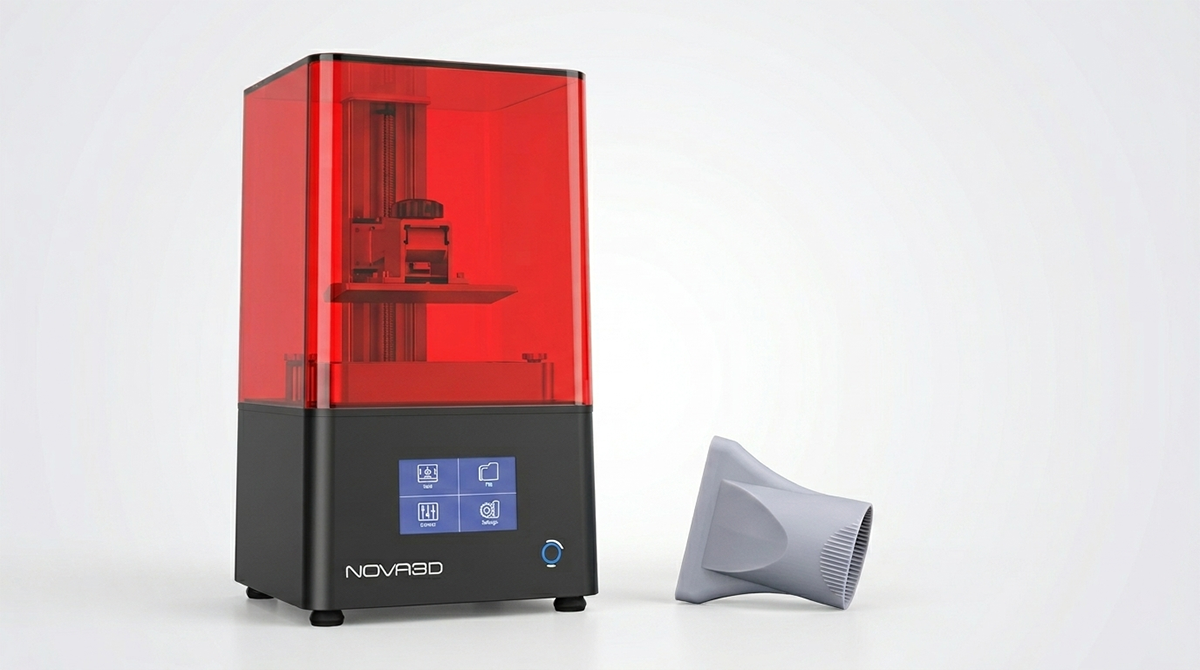
Currently, the studio is extending High-Temp Resin to more household high-temperature applications. The founder said, “We are not pursuing very large prints for now; instead, we focus on medium and small, high-precision heat-resistant parts. Demand for kitchen appliances and personal care devices is growing fast.”
Regarding future plans, he added: “We may add more desktop 3D print machines dedicated to small-batch High-Temp Resin production. We are also testing other NextShapes engineering resins, such as rigid and tough materials, but high-temperature resins are currently our mainstay.”
High-Temp Resin by NextShapes is a high-performance, heat-resistant photopolymer developed for 405nm LCD/DLP 3D printing technology. It offers a 130°C heat deflection temperature, excellent detail fidelity, fine texture, and high strength and hardness. It is ideal for heat-resistant housings, brackets, hairdryer nozzles, and functional prototypes for small appliances. If you want truly high-temperature 3D printed parts without compromising precision or surface quality, contact us.