



NextShapes Precision Stone 3D Printing Material: A Reliable Solution for High-Precision Dental and Medical Education Models
 2026.05.08
  NextShapes,Precision Stone,3D Printing
  <1 minute


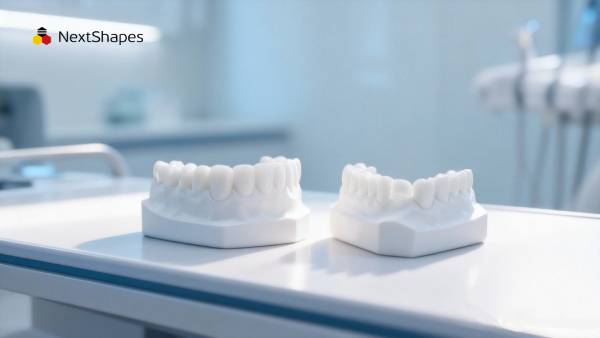
Precision Stone is a market-proven white dental model 3D resin, specifically designed for 355nm SLA 3D printing technology. It is renowned for its high hardness, high precision, clear details, and dimensional stability, capable of directly printing dental models, orthodontic molds, and human anatomy teaching models. To understand why this material has become an effective tool in dental and medical education, it is first necessary to review the longstanding challenges of precision and efficiency in traditional manufacturing methods.


Read More >
Precision and Efficiency Bottlenecks in Traditional Dental and Educational Model Manufacturing
For many years, dental labs, oral hospitals, and medical schools have sought 3D printing materials that simultaneously offer high precision, strength, and dimensional stability. For dental models, orthodontic molds, and human anatomy teaching models, clarity of detail, sharp edges, and long-term deformation resistance are critical.
However, traditional manufacturing methods, such as plaster casting and manual finishing, are labor-intensive, time-consuming, and struggle to consistently reproduce fine textures and complex geometries. Some users have tried general-purpose 3D resin, but these often fall short due to insufficient hardness, poor heat resistance, or surface whitening after cleaning—making them unsuitable for repeated clinical or educational use. As a result, many professionals have been forced to compromise between precision and efficiency.
High Precision, High Hardness, and Heat Resistance: Precision Stone Expands the Boundaries of Dental and Medical Education Applications

Precision Stone is a white dental model 3D resin specially developed for 355nm SLA 3D printing technology. It offers high printing precision, clear details, and fine textures. Printed parts feature excellent strength and hardness, along with good heat resistance and dimensional stability, minimizing deformation. The material is easy to clean, compatible with isopropyl alcohol or specialized cleaning agents, and leaves a smooth, residue-free surface.
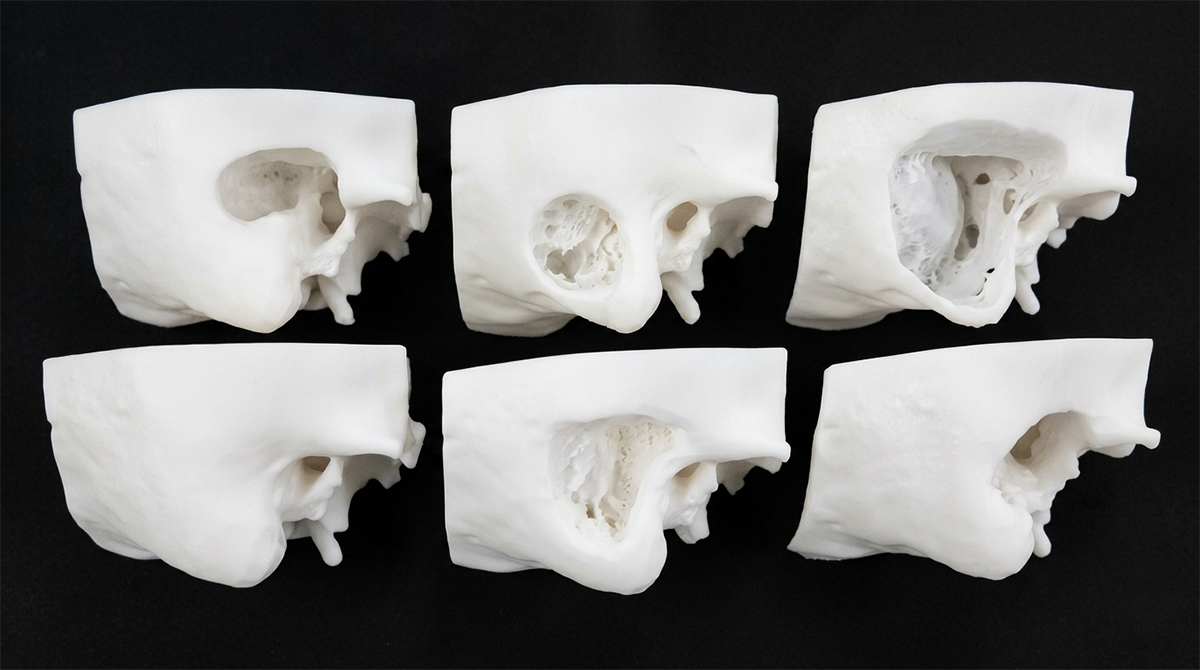
These properties make Precision Stone ideal not only for printing dental models and orthodontic molds but also for medical education models, such as human organs and bone cross-sections with intricate anatomical details. Its ability to produce 3D printed teaching specimens allows instructors and students to interact with realistic, durable models, improving hands-on learning outcomes.
A researcher at a university’s Oral Medicine Engineering Center commented:
"When printing full-mouth dental and orthodontic models with 3D printing, Precision Stone faithfully reproduces fine structures like cusps and grooves. Compared to traditional plaster models, there’s no need to wait for plaster curing, and shrinkage or deformation is not an issue. Key dimensions measured with calipers show excellent batch-to-batch consistency, which greatly supports the design workflow for invisible aligners."
At a major oral specialty hospital’s digital center, Precision Stone has replaced some outsourced molding processes. The center’s director stated:
"Clinically, we need to quickly obtain physical models corresponding to patient scans for treatment planning and bracket positioning. Previously, plaster or generic 3D printed resin models either lacked detail or became brittle after cleaning. Precision Stone models are hard, edges don’t chip, and they withstand hot water rinsing, greatly reducing rework. It saves us the hassle of sending cases to external silicone molding services, saving time and lowering per-unit costs."
Beyond dental applications, the material is also recognized in medical education. A director at a medical school anatomy lab shared:
"Human organ models require realistic textures, tactile feedback, and durability for repeated student handling. We used Precision Stone to print bronchial trees, hearts, and skull models using 3D printing for education purposes. Their hardness closely resembles rigid teaching specimens; surface details are clear, and alcohol wiping does not deform them. Compared to traditional injection-molded models, we can print specific anatomical cases on demand, greatly enhancing teaching flexibility."
A technical director at a medical 3D printing service provider added:
"Clients often request models with extremely fine tubes or thin-walled structures. Precision Stone flows well and has a high exposure tolerance on 355nm SLA 3D printing technology, preserving small features. Post-cleaning, the surface is non-sticky, and clients are highly satisfied. We consider this a mature dental-grade 3D resin, producing injection-mold-like surface quality without special handling."
Read More >
Streamlining Dental and Medical Education Model Workflows
NextShapes Precision Stone is compatible with mainstream 355nm SLA 3D printing technology, offering high equipment reliability and simple, standardized post-processing. Users can produce physical models directly from digital designs without relying on traditional plaster casting or multi-step silicone molding.
For dental labs, this shortens delivery cycles for orthodontic and restorative models. For hospitals and medical schools, it enables on-demand, low-cost production of patient-specific or educational models.
A senior consultant at a dental technology company remarked:
"Precision Stone is a solid-performing dental model 3D resin. It is hard but not brittle, making edge finishing easier without chipping. The dimensional stability is impressive—measurements after a week show almost no shrinkage. This is critical for long-term archived teaching models or clinical reference models. Combined with its easy cleaning, it is a reliable choice for 3D printing workflows in dental and medical education."
By removing cumbersome physical molding steps, Precision Stone allows professionals to focus on model design and clinical or educational applications, improving patient communication and student hands-on experience. For more details on Precision Stone’s specifications and printing settings, please contact our specialists.