


From Shoe Molds to Head Sculptures: How Users Achieve High-Detail Printing with NextShapes 405 nm 3D Resin
 2026.04.07
  NextShapes,Shoe Mold & Head Sculpt,3D Printing
  <1 minute


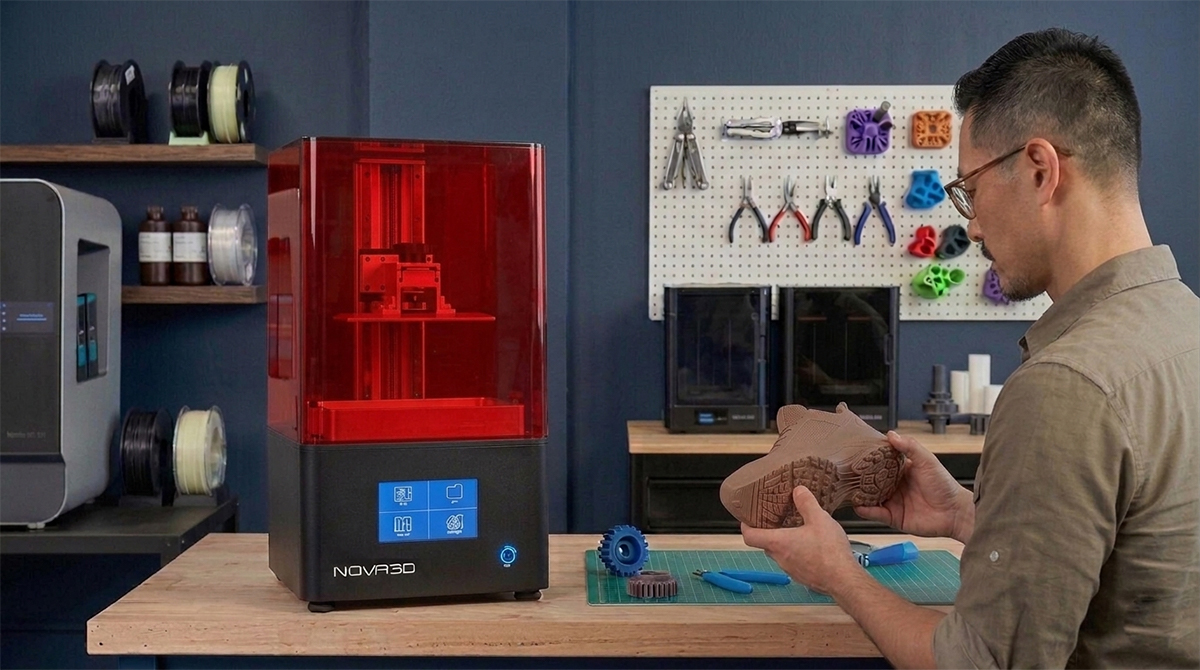
NextShapes’ 405 nm LCD 3D printing technology material is designed for scenarios demanding high detail and dimensional stability. The material has a coffee-brown color, a matte surface, and fine texture, offering exceptional detail reproduction. It is particularly suitable for 3D printing shoe molds, design validation, and artistic sculptures. In practice, it has been widely tested and recognized by designers, prototyping studios, and independent creators.
In this article, we interviewed three customers who use the Shoe Mold & Head Sculpt material in their daily work. Continue reading to learn about the material’s actual performance in high-detail mold production, rapid design validation, and artistic creation.
Production-Grade Shoe Mold Printing
A custom footwear studio in South China recently integrated NextShapes’ 405 nm material into its workflow. The studio specializes in limited-edition shoes that require molds with clear surface details and excellent dimensional accuracy to ensure consistent fit and appearance. Before adopting 3D resin printing, the team mainly relied on hand-carved master molds and silicone casting, a time-consuming process that was difficult to scale.
Today, the studio prints shoe molds directly using an LCD 3D printer with the coffee-brown material. According to a lead designer at the studio:
“The matte surface and fine detail reproduction are outstanding. We can replicate intricate textures like woven patterns and raised logos without any post-processing, and even after multiple castings, the parts maintain dimensional stability.”
The material’s ease of cleaning is also considered a major advantage. With minimal post-processing required, the team can go from print completion to a mold ready for casting in under an hour, significantly shortening the development cycle. This is a game-changer for studios that rely on 3D printing for fast prototyping.
Verifying High-Detail Footwear Designs
A footwear design consulting firm in the U.S. Northeast added Shoe Mold & Head Sculpt material to its existing 3D printing resin library for design validation and client presentation models. The company serves sports and lifestyle brands, requiring both visual realism and functional accuracy during prototyping.
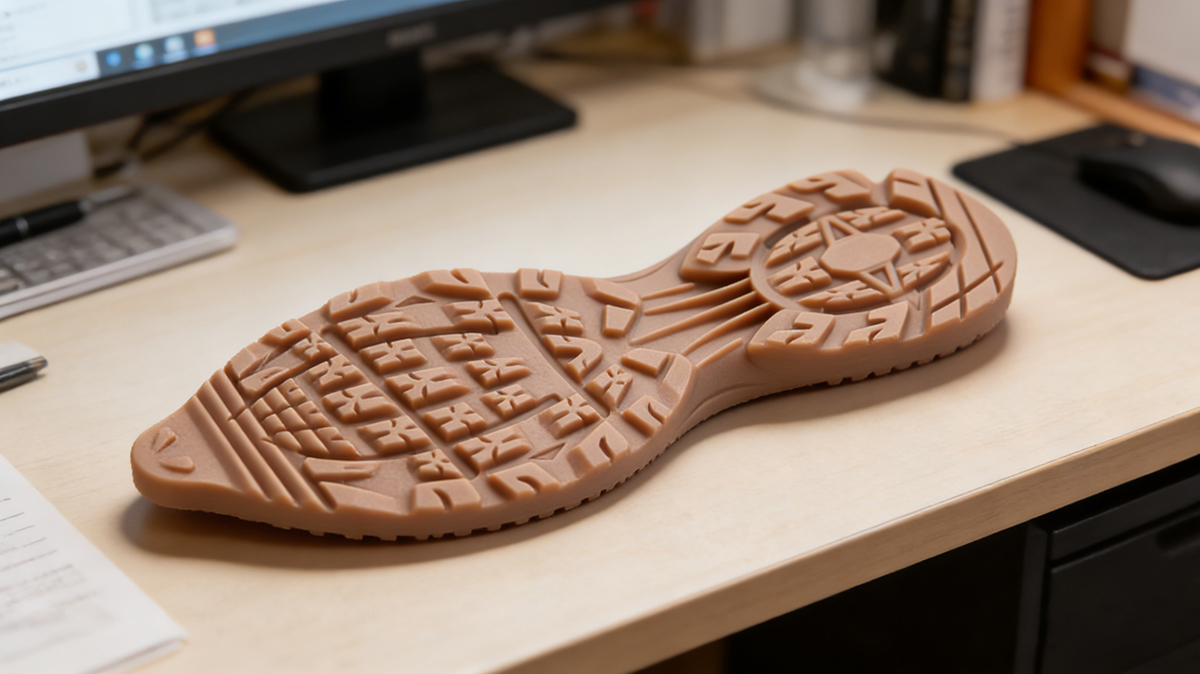
Previously, the firm used standard gray resin to produce midsole and outsole prototypes but found that fine grip patterns and brand details often appeared blurred or required extensive hand-finishing. After switching to the new material, a senior designer described it as a “significant leap in clarity and surface quality.”
“We printed an outsole with micro anti-slip textures on a standard LCD 3D printing technology system at 50-micron layer thickness,” the designer said. “The coffee color and matte finish eliminated glare under studio lights, allowing us to present texture effects accurately to clients. The level of detail retention rivals slower, higher-priced systems.”
The company has started using this material for snap-fit components and interlocking midsoles, noting that dimensional stability is key to maintaining assembly consistency across multiple iterations. 3D resin printing has enabled them to accelerate prototype cycles significantly.
From Clay to Clean High-Detail Printing
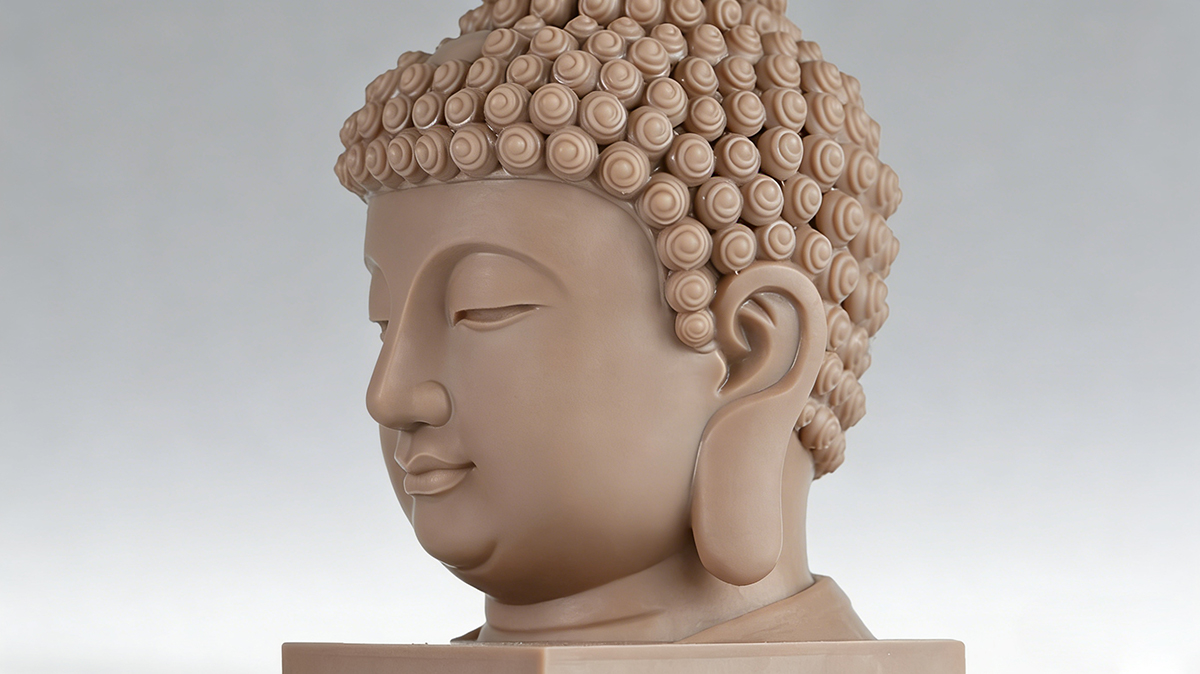
A freelance industrial designer based in Berlin focuses on head sculptures and articulated character figures. Early in his career, he relied on traditional clay modeling and silicone molds, which made revisions difficult and often resulted in inconsistent shrinkage. After transitioning to digital sculpting and 3D print workflows, he tried several standard photopolymer resins but consistently faced issues with brittle parts, visible layer lines, and difficult support removal.
Upon testing NextShapes’ 405 nm material, he found the combination of high detail and easy post-processing allowed for a more iterative creative workflow. He printed head sculptures capturing delicate facial features, hair strands, and undercut structures that previously required extensive handwork.
“Over the years, I’ve printed hundreds of prototypes, and this is the first material that lets me focus on sculpting itself rather than struggling with the 3D printing results,” he said. “Supports come off cleanly, surfaces are smooth but not reflective, and I can examine details under a magnifying glass. Print failures are rare, and when they happen, it’s usually due to my own support placement.”
He also noted that the coffee-brown color aids visual evaluation—compared to transparent or light-colored 3d resin, this color reduces surface glare, making it easier to judge shapes and textures during the design phase.
Experiencing the Material Firsthand
Reading about how others use NextShapes’ 405 nm LCD 3D printing technology material is a good starting point to see if it fits your workflow. But touching and observing the printed parts firsthand provides an entirely different experience. If you are interested in using the Shoe Mold & Head Sculpt material for 3D printing shoe molds, design validation, or high-detail artistic applications, you are welcome to contact our team below.