



355 nm SLA High-Temperature Resistant 3D Resin: Material Properties and Applications in Automotive Electronics and Prototyping
 2026.04.01
  NextShapes,Precision Thermo,3D Printing
  <1 minute


In the field of SLA 3D printing technology at 355 nm, the heat resistance and dimensional stability of materials directly affect the usability of functional prototypes. For applications that require resistance to high temperatures, strong light, or repeated assembly, we have developed a white, high-temperature resistant 3D resin called Precision Thermo.
This material offers excellent heat resistance, high hardness, low shrinkage, and outstanding dimensional stability, along with good moisture resistance. It is suitable for thermal functional testing, high-temperature fixtures and jigs, exhibition models under strong light exposure, and rapid 3D printing prototyping.
Below are user feedback from different application areas, demonstrating the performance of Precision Thermo in real-world 3D printed tasks.
“This high-temperature 3D printing resin, Precision Thermo, significantly outperforms standard 3D resin materials in heat deflection temperature and surface hardness, making it particularly suitable for functional jigs that require repeated assembly.”
— An automotive electronics thermal management engineer
Exhibition Models under Strong Light Exposure
Exhibition models often need to be displayed under spotlights or natural light for extended periods. Ordinary 3D resin prints are prone to warping, discoloration, or sticky surfaces due to heat generated by light exposure. Precision Thermo features a higher heat deflection temperature (HDT) and excellent UV aging resistance, maintaining both shape and color under intense light.
A user engaged in architectural model making reported that previous white 3D printed models showed noticeable sagging at corners after two days under display lights. After switching to Precision Thermo, the same model remained stable for a week under the same conditions, with the surface retaining a matte white finish.
“If this model were made with traditional CNC machining, the internal complex structures would be impossible to achieve. Ordinary 3D printing 3D resin couldn’t withstand the exhibition lighting. Precision Thermo solves that problem perfectly.”
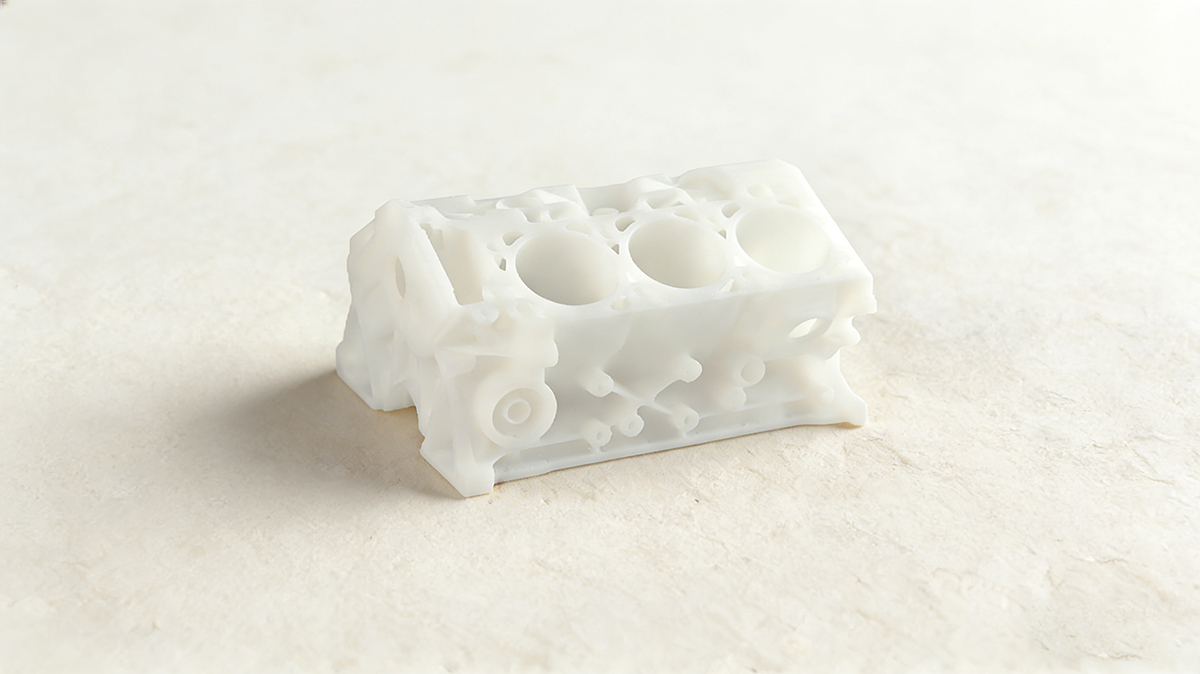
“What impressed me most is how easily the supports can be removed. Because the material is hard and has low shrinkage, the adhesion between the supports and the model is more controllable. Most supports can be snapped off by hand with almost no trace.”
“I’ve tried many brands of high-temperature 3D resin, and Precision Thermo offers the best overall performance in print success rate, surface quality, and thermal stability.”
The user also noted that due to minimal support damage, post-processing time was reduced by approximately 50% compared to standard 3D resin.
High-Temperature Fixtures and Jigs
In automotive electronics testing, PCB soldering fixtures, and high-temperature aging tests, jigs must repeatedly withstand thermal cycles of 60°C–120°C and mechanical loads while maintaining millimeter-level positioning accuracy. Ordinary SLA 3D printing technology resins tend to creep under high heat. In contrast, FDM-printed engineering plastics (such as ABS or PC) offer good heat resistance but have surface roughness that does not meet precision positioning requirements.
A fixture design engineer used Precision Thermo to print claw components for thermal shock testing. These components include multiple fine positioning pins and clips, requiring extremely high dimensional accuracy. Using standard 3D printing resin often required 2–3 iterations to produce a qualified part, and the claws deformed plastically after dozens of uses.
After switching to Precision Thermo, the first print met design dimensions (shrinkage <0.2%). In tests at 85°C under 200 consecutive loads, the claw’s positional deviation was less than 0.05 mm, with no cracks or surface softening. The material also exhibits good moisture resistance; after one week at 85% relative humidity, dimensional changes were negligible.
“When we need to print jigs for direct thermal functional testing, we prioritize Precision Thermo, our high-temperature 3D printing 3D resin. Its comprehensive performance is very close to injection-molded engineering plastics but saves the time and cost of tooling.”

Functional Verification in Rapid Prototyping
Rapid prototyping requires not only fast 3D printing but also prototypes that can simulate the mechanical and thermal performance of final products. The high hardness and dimensional stability of Precision Thermo make it especially suitable for assembly verification, screw connection testing, and durability evaluation of snap-fit structures.
A drone prototype engineer attempted to print motor mounts and battery compartment covers using Precision Thermo. These components must withstand motor heat (~60°C) and repeated disassembly stresses. Previously, motor mounts printed with standard 3D printing resin often cracked at the threads during screwing, while FDM-printed PC parts suffered from insufficient interlayer bonding.
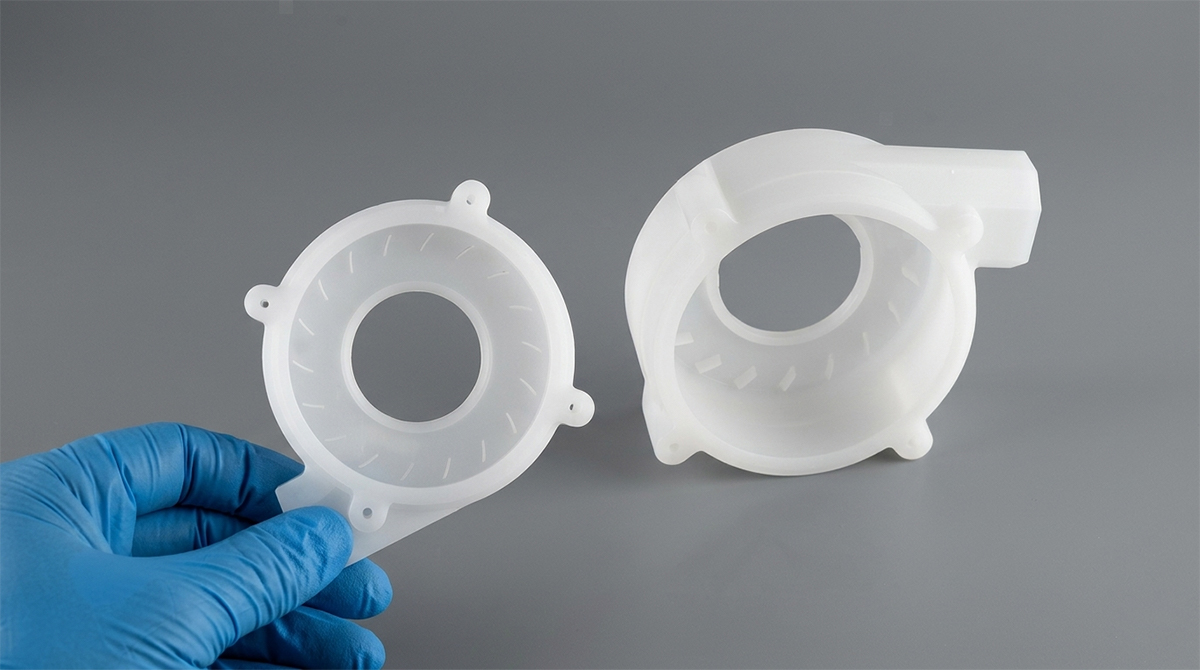
Components printed with Precision Thermo demonstrated good rigidity and toughness during assembly tests. A 1.5 mm thick snap-fit structure endured 20 cycles of opening and closing without breakage or permanent deformation. Support removal was also straightforward, with no damage to the model surface during trimming, reducing sanding work.
“Precision Thermo strikes a great balance between heat resistance and printing precision. Previously, I had to use FDM for high-temperature parts and SLA for fine details; now one or two 3D printed 3D resin types cover most functional testing needs.”
Experience Precision Thermo Yourself
Leveraging 355nm SLA 3D printing technology, Precision Thermo brings true engineering-plastic-level performance to desktop 3D printing. In every test case, it withstands the toughest challenges posed by users—whether under strong light exposure, high thermal load, or repeated mechanical assembly.
Want to see the surface quality and heat resistance of 3D printed Precision Thermo parts firsthand? Contact our team for detailed information.