


How to Accelerate Prototype Enclosure Validation and Iteration with NextShapes ABS Like Plus Using 3D Printing
 2026.03.31
  NextShapes,ABS Like Plus,3D Printing
  <1 minute


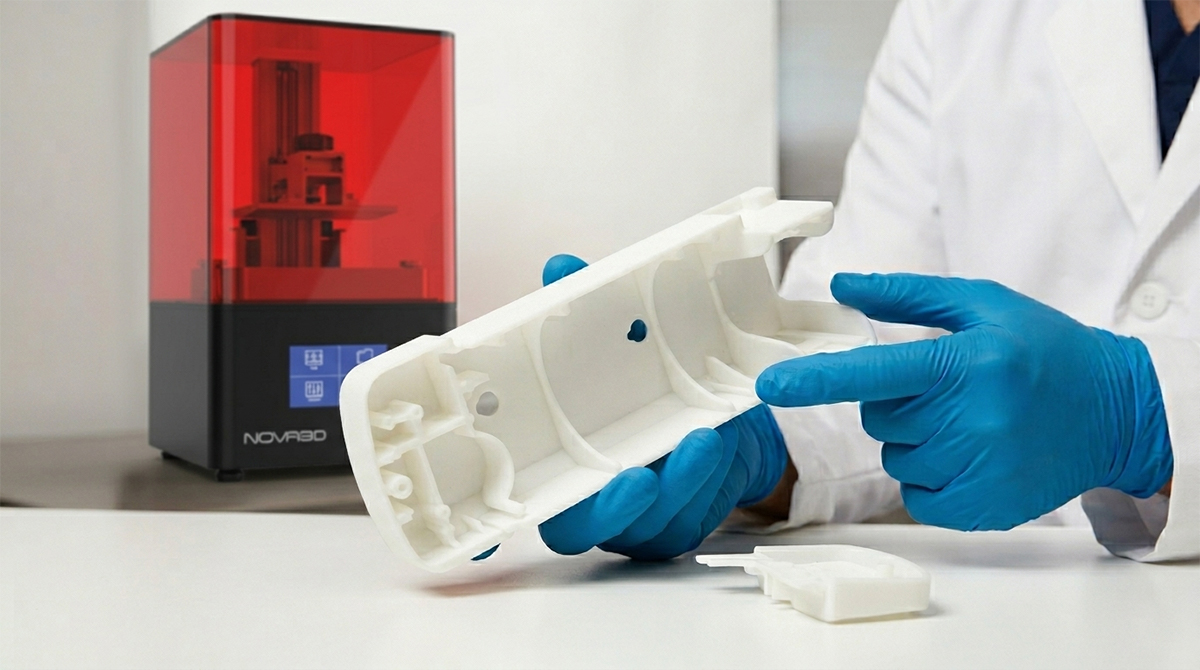
Zhang, a structural engineer at an industrial design company in the Yangtze River Delta, has long been responsible for producing prototypes and functional verification of consumer electronics and industrial equipment enclosures. His team needs to create assembly-ready, testable plastic enclosures for internal reviews, fit testing, and small-batch trial assembly for different clients daily. In the past, they relied on outsourced CNC machining or FDM printing. However, CNC was costly and time-consuming, while FDM prototypes suffered from rough surfaces, insufficient interlayer strength, and could not withstand drilling or tapping for real assembly testing.
After testing various photopolymer resins, Zhang discovered that NextShapes ABS Like Plus perfectly met their requirements: a white, engineering-grade material with high hardness, strength, and precise dimensional stability. It is durable, capable of enduring repeated bending and impact without cracking, and—most importantly—its toughness allows for drilling, tapping, and easy cleaning, making it ideal for directly producing functional prototype enclosures—from appearance mockups to structural validation parts using 3D Printing.

Read More >
3D Printing Assembly-Ready, Testable Functional Enclosure Prototypes
Traditionally, prototype production in manufacturing relied heavily on FDM or outsourced CNC. FDM-printed enclosures exhibit noticeable layer lines, resulting in poor surface finish and weak interlayer bonding. Even moderate screw torque can cause cracking, thereby preventing the realistic simulation of the mechanical behavior of injection-molded parts.
Zhang’s team turned to lcd 3d printing technology, particularly valuing ABS Like Plus for its engineering-grade performance. Enclosures printed with this 3D print material are smooth, hard, and exceptionally tough, capable of withstanding drop tests and repeated assembly.
In one case, the team received an urgent project: designing enclosure prototypes for a handheld testing device, with the requirement to produce five sets for functional and assembly testing within three days. Traditional CNC machining would take a week and cost about 3,000 RMB. Zhang decided to print all enclosure components (top cover, bottom cover, battery cover) directly with 3d resin ABS Like Plus on a NextShapes 405 nm LCD printer. Each set used only 65 mL of 3d resin, costing less than 10 RMB per set.

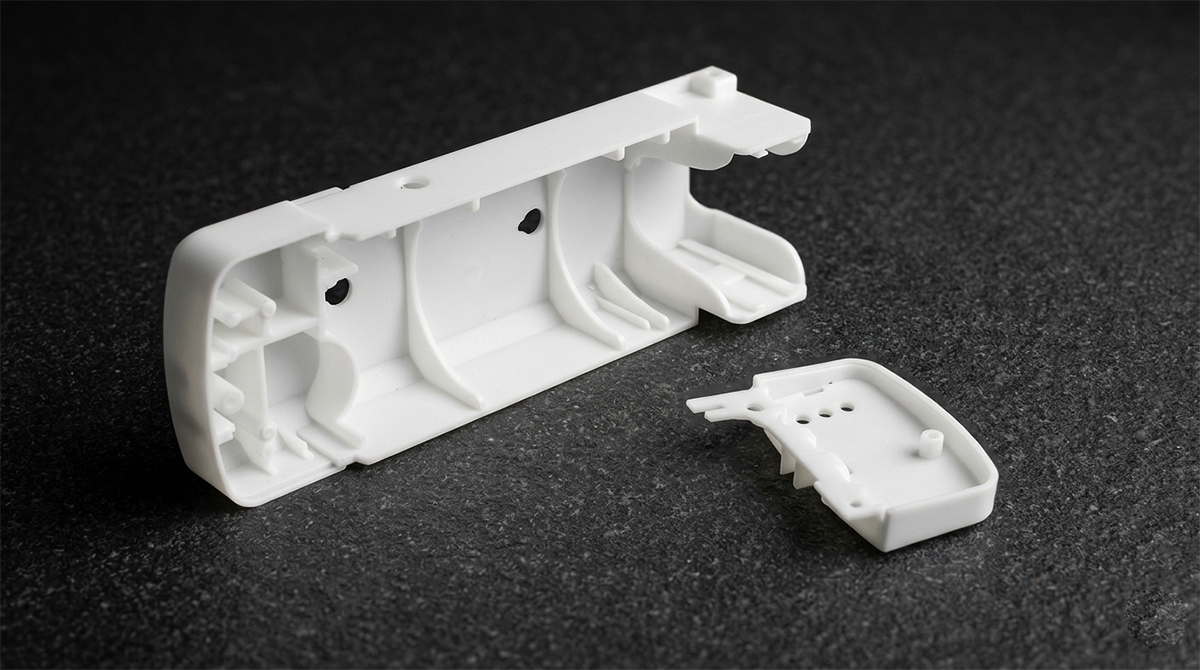
He commented:
"ABS Like Plus is the 'workhorse material' in our prototype workshop. Its surface finish is close to that of injection-molded parts, its dimensional accuracy is stable, and its toughness is outstanding—we directly tapped M2.5 screw holes into the enclosure and repeatedly tightened screws a dozen times without stripping or cracking. Cleaning is fast; a rinse with alcohol is enough for post-curing."
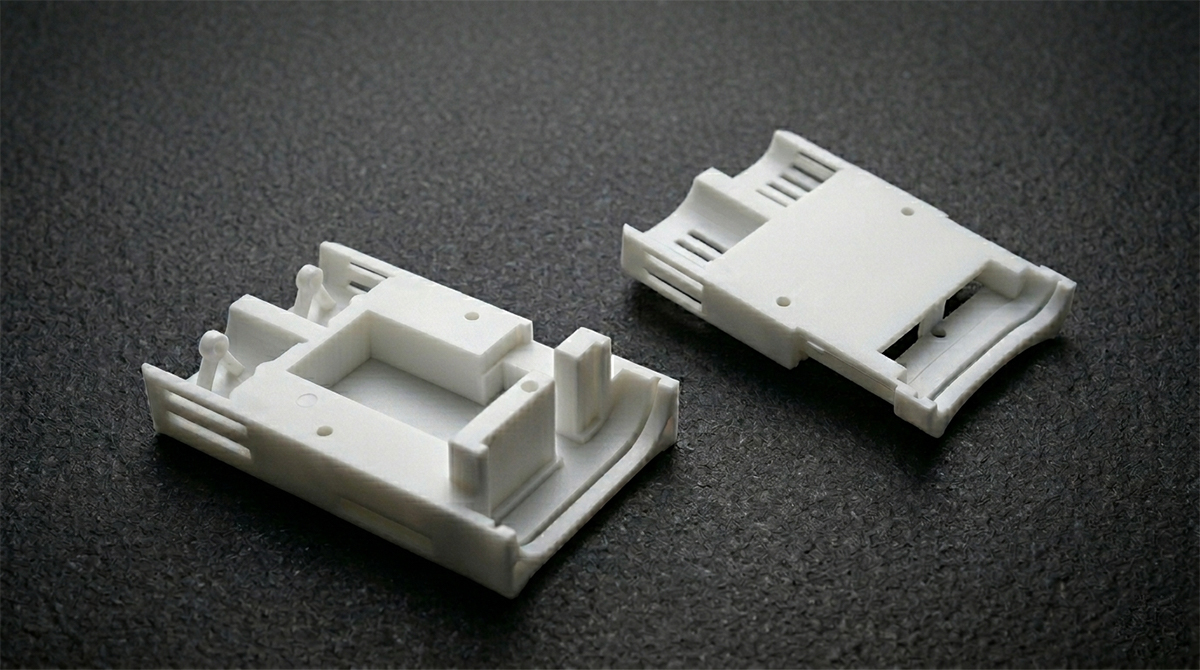
Having assembly-ready prototypes within hours allowed the design team to quickly verify interference, snap-fit strength, and button feedback. With the printer on-site, the entire workflow from 3D model to functional enclosure using industrial 3d print could be completed within six hours. This rapid response capability directly shortened the product development cycle for urgent design changes.
Using 3D Printing enclosures, Zhang’s team completed two design iterations in three days, with the final design passing customer assembly testing in a single round. Compared to traditional CNC methods, this approach saved approximately 80% of development time and 90% of costs.
Zhang didn’t stop there. To further validate the enclosure’s durability under real-world conditions, he printed three iterations of the same enclosure with 3D print ABS Like Plus, performing drop tests, repeated screw assembly, and high-temperature (50°C) storage tests. The ABS Like Plus enclosures sustained a drop from 1.2 meters onto concrete with only minor edge scratches, and the overall structure remained intact, without the layer separation common in FDM prints.
"Previously, FDM-printed enclosures would crack along layer lines when screws were tightened, making real assembly testing impossible. With ABS Like Plus using 3D Printing, we can use self-tapping screws with brass inserts, simulating mass-production assembly. Now, when clients see our prototypes, their first reaction is, 'Is this really 3D printed?'—because the surface quality and strength exceed expectations."
Saving Valuable Tooling Resources
3D Printing not only accelerates prototype production but also significantly reduces unnecessary mold investment. Zhang’s team often needs to present multiple design concepts to clients before finalizing the product. Previously, creating a simple mold or CNC prototype for each option was prohibitively expensive. Now, using ABS Like Plus, they can produce three different design variants on the same printer platform with lcd 3d printing technology (e.g., varying button layouts or ventilation patterns).
Thanks to ABS Like Plus’s high hardness and strength, printed enclosures can accommodate real circuit boards, screens, and batteries for functional testing. The team assembles the three variants and invites the client to operate them side by side. Once a preferred design is selected, the team can immediately refine and reprint based on feedback using industrial 3d print.
This rapid iteration process avoids the significant risk of discovering design issues after mold creation. For example, a typical injection mold costs 20,000–50,000 RMB and takes 4–6 weeks. Using ABS Like Plus to produce validation prototypes with 3d resin, the cost is less than 100 RMB and takes only a day. Even after ten iterations, the total cost remains far below a single mold, while time-to-market is greatly accelerated.
Another advantage is that these prototypes can be used for user testing, trade show displays, or small-batch trial production. Unlike traditional photopolymers that are brittle, ABS Like Plus enclosures can withstand repeated disassembly and demonstration, with snap-fits and screw posts remaining intact—thanks to the material’s toughness and impact resistance.
Zhang’s team has standardized this workflow into the “Rapid Enclosure Prototype Development Guide Using ABS Like Plus Material.”
Enhancing Development Speed and Cost Efficiency
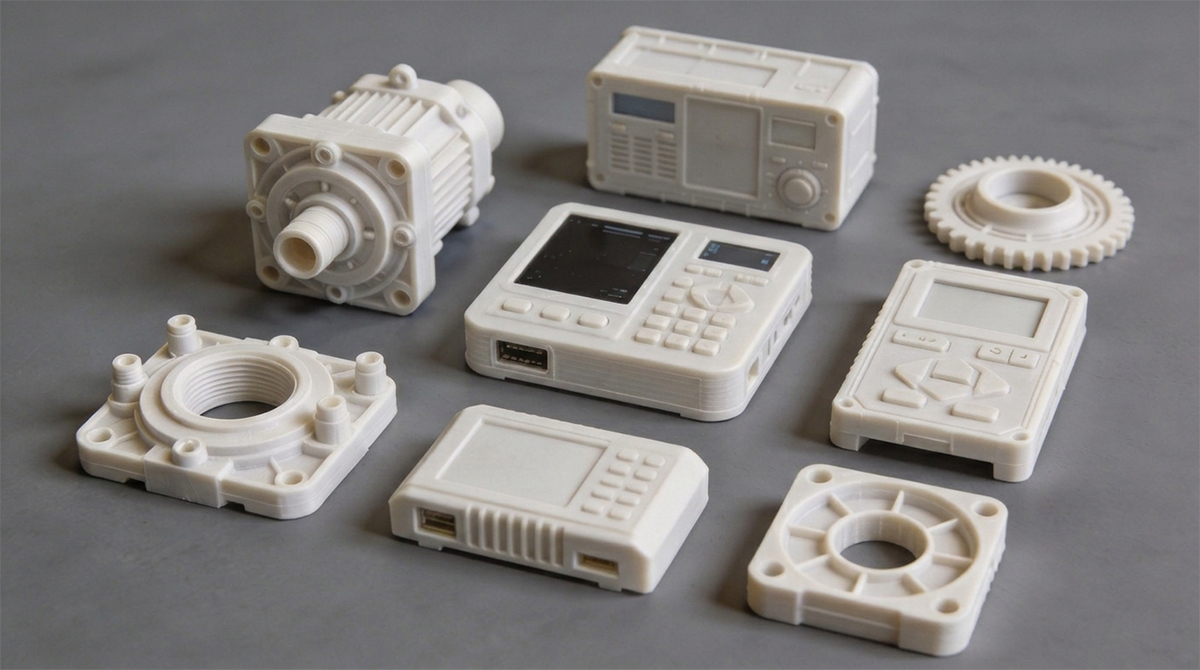
Zhang is not the only industrial designer benefiting from NextShapes ABS Like Plus. In South China, Li, a product design manager at a smart hardware startup, faced similar challenges. Previously, his team had to send enclosure designs to external SLA or CNC shops, resulting in high per-unit costs, long communication cycles, and wasted prototypes if designs changed.
After adopting ABS Like Plus, they can directly print assembly-ready, functional enclosures in-house using 3D Printing.
Li’s team once needed eight enclosure prototypes for an IoT gateway device to conduct client trials and electrical testing. The prototypes had to withstand repeated disassembly, PCB installation, screw tightening, and basic drop tests. Enclosures printed with 3d resin ABS Like Plus met all requirements, and after surface finishing (sanding and painting), resembled production parts.
Enclosure prototypes are the 'language of communication' in product development. Previously, waiting for a prototype took a week, and the team was stuck—creative momentum stalled. Now, with ABS Like Plus and lcd 3d printing technology, I can modify the design in the morning and have a screwable, drop-testable enclosure by afternoon. This 'design-iterate-get' workflow has tripled our product iteration speed." — Li, R&D Manager, South China Smart Hardware Company.
To learn more about NextShapes 405 nm photopolymer resin series and how 3D Printing can accelerate your product development, visit our product page.

