


NextShapes Elastic Flexible Material: A New Agile Development Solution for Custom Seals and Damping Components in 3D Printing
 2026.03.30
  NextShapes,Elastic,3D Printing
  <1 minute


NextShapes Elastic 405nm resin is a black flexible material designed for 3D Printing, specifically optimized for LCD 3D printing processes. As a high-performance 3D resin, it can simulate the elasticity of rubber or TPU. It offers excellent tear resistance and remains durable even under repeated bending or compression without easily breaking. As an alternative to traditional outsourced molding processes using silicone, polyurethane, or rubber, Elastic enables engineers and designers to rapidly prototype and produce small batches of flexible components through 3D printing workflows—significantly shortening development cycles and reducing upfront costs.
Leveraging advanced lcd 3d printing technology, the material’s key mechanical properties—including elongation at break, tear strength, and compression set—have been systematically tested and validated. This allows users to accurately predict how flexible components will perform under real-world conditions during the digital design phase. Whether developing custom seals, damping components, or functional gaskets, users can more reliably transition from digital models to physical validation using 3D Printing solutions.
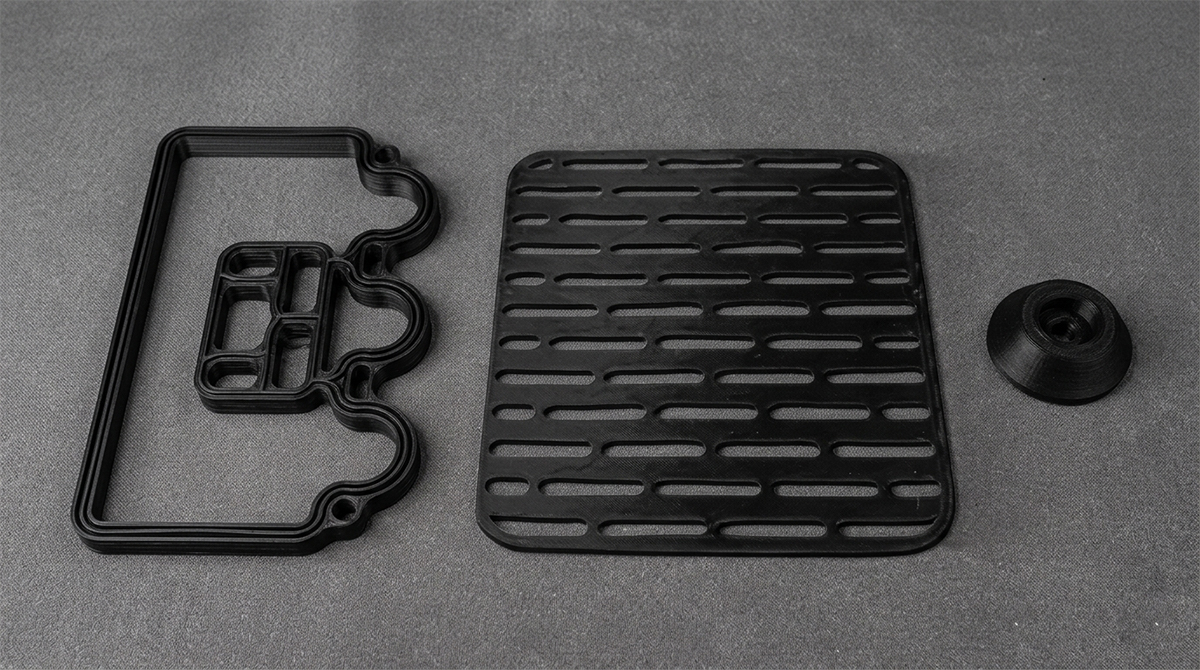
According to a product manager at a software platform, the ability to internalize elastomer prototyping marks a major shift in product development. “In the past, designers had to outsource silicone or polyurethane parts, which increased costs and extended iteration cycles. With the emergence of high-performance flexible materials like Elastic, teams can now produce durable, functional prototypes in-house using industrial 3d print capabilities. This bridges the gap between design intent and physical testing, enabling faster iteration without compromising part integrity.”
Many design teams and manufacturers have already begun leveraging Elastic for rapid prototyping and end-use applications. For example, an industrial components supplier used Elastic as a 3D resin alternative to replace traditional outsourced silicone processes when developing a series of custom seals, reducing prototype lead time from several weeks to just a few days. Meanwhile, a vibration control solutions company applied Elastic in 3D Printing production to manufacture cushioning gaskets and damping mounts, demonstrating the material’s tear resistance and elastic recovery under repeated compression.
Case Study: Efficient Development of Custom Seals and Damping Components
An industrial components manufacturer specializing in custom seals, gaskets, and damping parts for automation equipment, electronic instruments, and industrial machinery faced challenges with traditional development workflows. Previously, each new part required mold-making or outsourcing to silicone/polyurethane vendors, with a single iteration cycle taking 2–3 weeks and incurring high mold modification costs. As customer demand for shorter lead times and greater customization increased, the company urgently needed an in-house solution to rapidly validate the geometry and mechanical performance of flexible components through 3D printing.
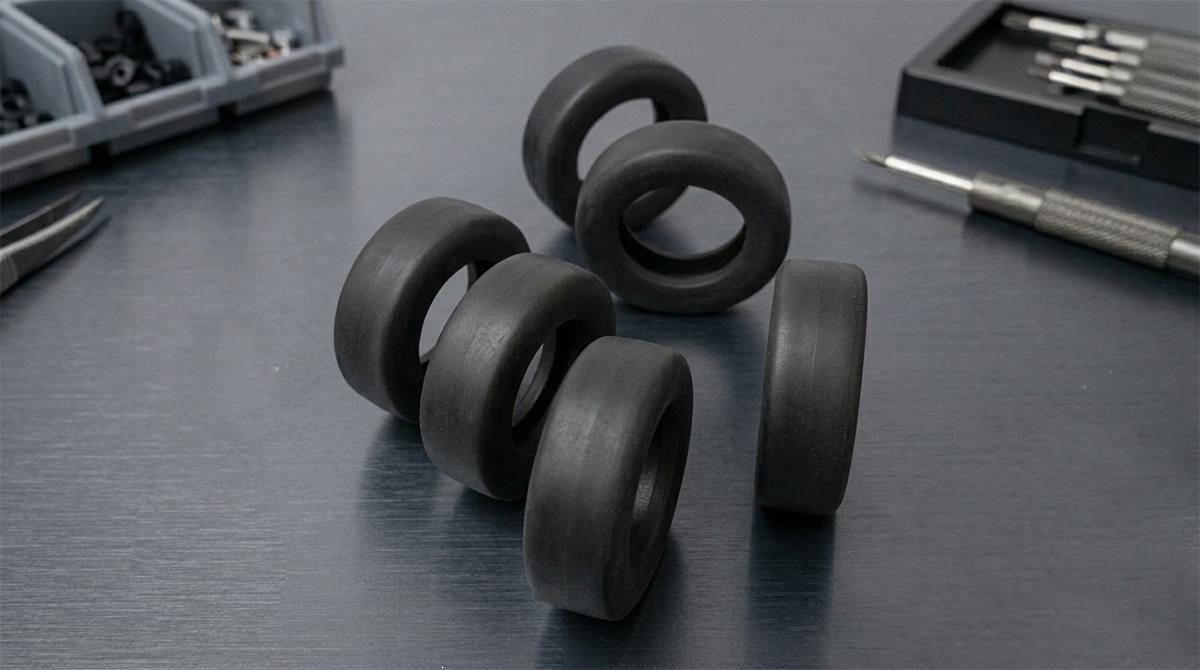
The design team created 3D models of seals and damping components and directly produced them using NextShapes Elastic via LCD 3D printing. From sealing lip cross-section design to compression behavior of damping pads, the team could quickly convert digital models into functional physical parts—significantly reducing trial-and-error.
The lead engineer first printed a series of seal prototypes with different cross-sectional geometries using lcd 3d printing technology to evaluate groove fit and initial compression. The team then designed multiple versions of damping mounts with varying lattice structures and wall thickness distributions, validating elastic recovery and durability through physical compression testing enabled by 3D Printing. Over three iterations, the team produced more than 40 functional prototypes, with each iteration cycle completed in just 2–3 days—nearly a fivefold increase in development efficiency compared to traditional outsourcing.
“Elastic’s biggest advantage is that it combines rubber-like flexibility with sufficient tear strength to withstand repeated assembly and dynamic loads,” said the company’s engineering lead. “Previously, we could only print rigid models that represented geometry, but couldn’t validate sealing or damping performance. Now, with industrial 3d print solutions, we can directly produce fully functional parts for real assembly testing—something that was unimaginable before.”
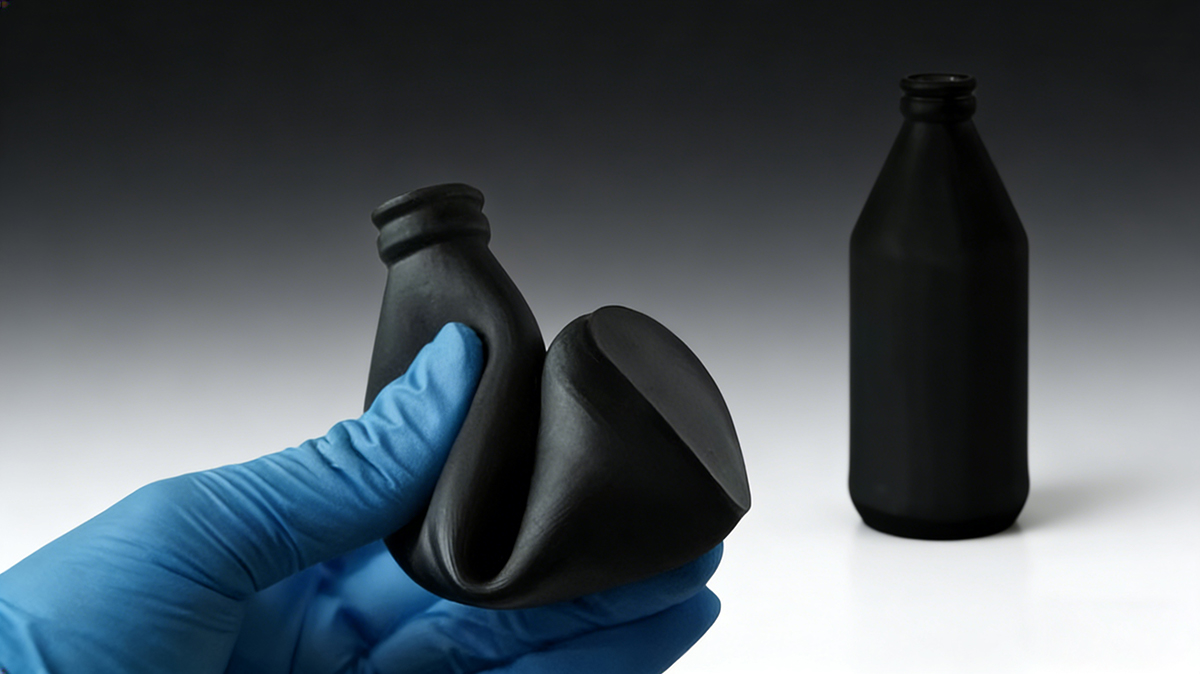
Ultimately, the company integrated Elastic into the prototyping phase of multiple production parts and even used 3D Printing for end-use components in small-batch custom orders. By deeply integrating flexible materials into a digital design workflow powered by lcd 3d printing technology, the team successfully reduced the average development cycle for seals and damping components from 6–8 weeks to under 2 weeks, while significantly lowering upfront tooling and outsourcing costs.
This successful implementation demonstrates that Elastic is not only suitable for prototyping but also holds strong potential to replace traditional outsourced manufacturing processes in small- to medium-batch customized flexible component production using 3D resin systems. We look forward to seeing more users leverage Elastic and 3D print technologies to achieve agile product development and delivery in sealing, damping, and flexible connection applications.

Read More >