



FDM 3D printing Material Standard PLA: The Ideal Choice for Cute IP Characters
 2026.03.19
  NextShapes,Standard PLA ,3D Printing
  <1 minute


From small Minion figurines on your desk to Line Friends plush toys on your bookshelf, and even to original chibi-style characters, cute IP figures are increasingly becoming part of everyday life. The widespread adoption of FDM (Fused Deposition Modeling) 3D printing technology has enabled more creators than ever to turn their adorable ideas into tangible objects—whether it’s a one-of-a-kind birthday gift for a friend or the first prototype of an original IP, 3D printing has significantly lowered the barrier to creation.
In this process, the choice of filament often determines the final “cuteness factor” of a creation—whether the rounded contours are smooth, whether the big eyes are detailed, and whether the surface is easy to paint. All these aspects directly affect whether each adorable character comes to life in the hands of its audience.
As the saying goes, “To do a good job, one must first sharpen one’s tools.” For creators passionate about making cute IP characters, Standard PLA filament for 3D printing is a reliable tool that combines excellent printing performance with user-friendly operation. As a bio-based polymer material, PLA is favored for its low shrinkage, high detail fidelity, and superior surface finish, making it one of the top FDM filaments for producing cute figurines, chibi dolls, and IP merchandise. A new materials technology company specializes in R&D and production of FDM filaments, providing high-quality PLA filament for 3D printing for IP creators, merchandise studios, and model enthusiasts, enabling every adorable character to be perfectly 3D printed.
We spoke with the company’s Product Director to explore how PLA filament for 3D printing is applied in the production of cute IP characters and why it has become a favorite among creators.

Read More >
Rewarding the Creators of Cuteness
Imagine wanting to make a Minion-shaped keychain for a friend, or producing the first batch of your original chibi monster IP. Traditional sculpting or mold-making methods are time-consuming and costly. 3D printing has completely changed the game—you can draw your cute character on a computer or tablet and send it to a printer, and in just a few hours, your adorable creation is ready to hold.
Among many FDM materials, Standard PLA filament for 3D printing is especially favored for cute characters because of its unique combination of properties. As a bio-based material extracted from renewable plant resources such as corn or cassava, PLA has a relatively low melting temperature (typically 190–210°C), emits minimal odor during printing, exhibits very low shrinkage, and resists warping. This means even a chubby, rounded head design can maintain its dimensions without distortion when 3D printed.

"The charm of cute characters lies in their rounded, adorable features—Minions’ big eyes, plump bodies, smooth skin texture—each detail needs precise reproduction," says the Product Director. "The flow properties of PLA filament for 3D printing ensure these rounded features are perfectly 3D printed, with good layer adhesion, smooth surfaces, and minimal post-processing. This is exactly what is needed for producing lovable figurines."
This “cuteness-first” characteristic makes Standard PLA the top choice for countless creators. Of course, for functional parts requiring higher toughness or heat resistance—such as movable joints or frequently handled figurines—materials like ABS or PETG are indispensable. Different filaments serve different creative needs, together forming a diverse ecosystem for IP merchandise production.

Read More >
One Size Does Not Fit All: Meeting the Diverse Needs of Cute IP
While materials may be readily available, applying them effectively is not simple. The world of cute IP characters is vast—from classics like Minions and Pikachu to trendy blind-box figures in Pop Mart style, to individually designed cute illustrations. Each type of creation demands different material characteristics.
During prototyping, creators need PLA filament for 3D printing that prints quickly and tolerates minor errors to rapidly verify proportions and cuteness. In the refinement stage, designers care about smooth surfaces suitable for painting. When producing small-scale merchandise (like keychains, fridge magnets, or desktop figurines) in batches, users focus on whether the filament supports high-speed printing while preserving detail and efficiency.
"Our community of creators is extremely diverse," the Product Director adds. "There are studios specializing in IP merchandise customization, independent toy designers, and parents printing animated characters for their kids. Each has different expectations from PLA—some need bright yellow for Minions, others prefer soft pink for cute dolls, and some require a stable formula compatible with older printers and slicing settings."
A truly versatile PLA filament for 3D printing must offer broad printer compatibility and parameter tolerance, producing smooth and detailed 3D printed results across different machines and print speeds. A wide color selection is equally essential—after all, who can resist a reel of authentic “Minion yellow”?

The Challenge of Traditional R&D: Lengthy Formula Tuning
Creating a PLA filament for 3D printing specifically for cute characters is not simple. Early development relied heavily on trial-and-error. Engineers repeatedly adjusted the ratios of base PLA resin, nucleating agents, lubricants, and color masterbatches. Even minor changes could affect melt flow, layer adhesion, surface finish, and final visual appeal when 3D printed.
"Every formula adjustment required producing a batch of samples and testing them on different printers," recalls the Product Director. "Cute characters demand high surface quality—we often used rounded spheres or chibi heads to evaluate formula performance. From raw material mixing to extrusion and final 3D printing, a complete test cycle took at least a week. If any parameter was suboptimal—like insufficient smoothness or roundness—we had to start over."
Different colors and batches of masterbatches also affected material flow differently. To ensure consistency across vibrant yellows, cherry pinks, and sky blues, dozens of formula tweaks were often necessary. This painstaking approach guaranteed product quality but slowed new product release significantly.
"Developing a new color of our cute-specific PLA filament for 3D printing sometimes takes two to three months from formula finalization to batch production. For IP creators who need a quick market response, this pace is far from ideal."
Mass Production Strategies: Standard PLA Meets Both Common and Niche Needs
The company adopts a layered approach to production: for high-demand basic colors and standard sizes, traditional injection molding and automated extrusion lines ensure efficiency and cost advantage. For small-batch, specialized scenarios—like custom IP colors or matte-finish limited editions—flexible production is used.
"About 80% of demand is concentrated in ten or so commonly used colors such as yellow, pink, blue, and white," explains the Product Director. “These are produced via injection molds with automated extrusion lines for efficiency and stability. The remaining 20% demand diverse colors or specific surface textures. For example, designers may want pearlescent pink for the princess series or saturated yellow for Minion merchandise. Traditional mold-making for these niche demands is cost-prohibitive."

Read More >
To address this, the R&D team implemented flexible production. By optimizing fast color-changing on extrusion lines and adapting molds and fixtures, they can now switch colors in hours, achieving small-batch, multi-variety production. This expanded their color-specific PLA filament for 3D printing color range from a dozen to over 30, including classic, pastel, and metallic options.
"We can now fulfill small-batch orders in just a few days without worrying about high mold costs," the Product Director adds. "Flexible production better serves niche IP creator needs."
Smooth and Fast: Material Formulation Delivers Cuteness
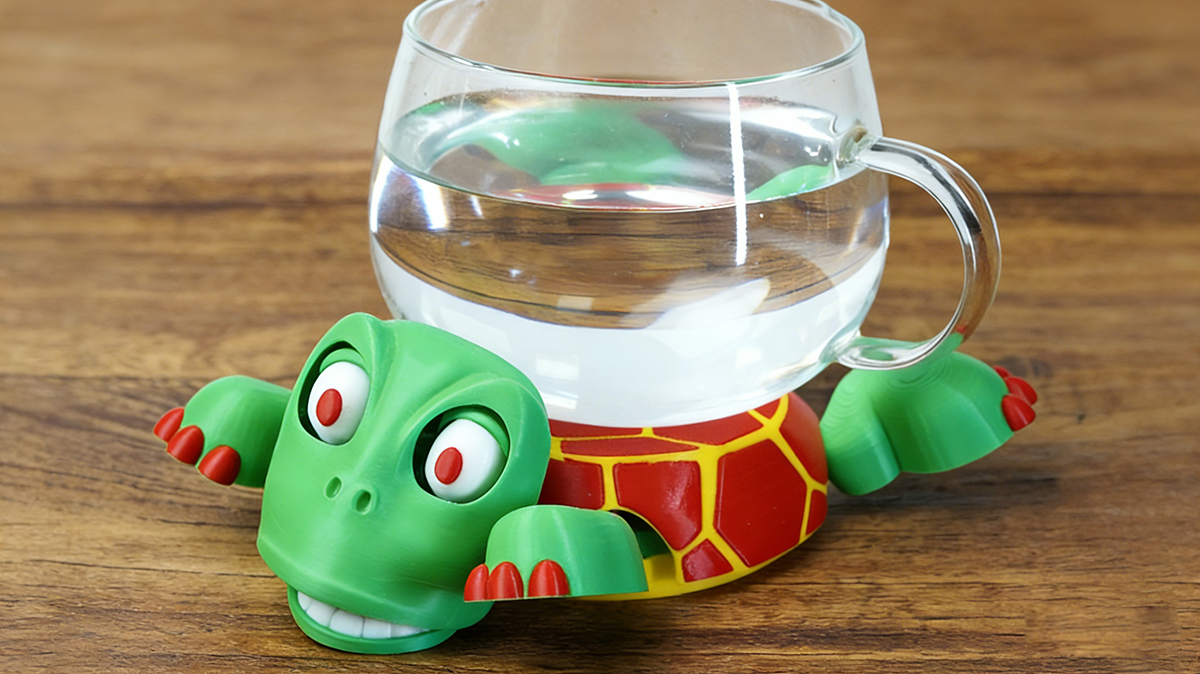
For Standard PLA, balancing print flow and surface smoothness is crucial for producing cute IP characters. The charm of these creations lies in their rounded and smooth textures—Minions’ silky skin, Pikachu’s plump cheeks, and the fine surfaces of blind-box figures.
The R&D team optimized lubricants and nucleating agents, achieving excellent melt flow. Even at high speeds (150 mm/s+), the PLA filament for 3D printing extrudes evenly and continuously, with minimal shrinkage. Large chibi figures maintain dimensional stability, and smooth contours remain intact. The material sets post-extrusion quickly, ensuring subtle layer lines and polished surfaces in the final 3D printed product.
"We focused on ‘cuteness tolerance’—ensuring smooth surfaces under varying print temperatures and cooling conditions," says the Product Director. "Creators want printed Minions ready to gift, with minimal post-processing. Optimizing PLA filament for 3D printing makes ‘ready-to-use’ 3D printed creations possible."
This smoothness-first philosophy has earned Standard PLA a strong reputation among cute IP creators. Many report improved surface quality and more uniform paint coverage when using this filament.
"A parent told us she printed a Minion in our bright yellow PLA filament for 3D printing for her child. The surface was so smooth, it didn’t need sanding, and her child loved it," the Product Director shares.
Environmental Testing Ensures On-Site Reliability
The company enforces strict internal testing to ensure each batch of PLA filament for 3D printing meets high-quality standards. Test pieces are exposed to varying temperatures and humidity to simulate seasonal and regional conditions. Tensile strength and layer adhesion are tested to confirm durability for small merchandise in daily use, ensuring every 3D printed object remains reliable.
"We have a comprehensive testing process—from diameter tolerance, roundness, and spool consistency to extrusion uniformity, layer adhesion, and surface smoothness," explains the Product Director. "We even use cute test models with rounded surfaces and large eyes. Only 3D printed batches that pass perfectly are packaged."
Strict quality control has resulted in stable market performance. Thousands of cute IP characters have been 3D printed, including fan art, original figurines, blind-box samples, and parent-child craft models.
"A blind-box designer told us his first pink PLA filament for 3D printing samples looked so professional that the factory thought they were resin-3D printed, not FDM," the Product Director adds. "Creators report that the material is stable, letting them focus on design rather than adjusting printer settings. This is exactly the effect we wanted."
3D Printing Promotes Widespread Cute IP Creation
With the continuous adoption of 3D printing in the IP merchandise sector, the value of Standard PLA is increasingly recognized. It is not only an easy-to-use entry-level filament, but also a bridge connecting digital creativity to tangible, cute creations.
Within the company, promoting PLA filament for 3D printing in the cute IP field is an important ongoing task. The R&D team regularly communicates with independent designers and studios to gather feedback and integrate it into product iterations. Many creators actively share their experiences and 3D printing parameters, forming a collaborative ecosystem around 3D printing cute IP.
"Once, a designer contacted us with a series of round, chubby monsters and requested a creamy yellow to enhance the soft and cute look," recalls the Product Director. "We adjusted the PLA filament for the 3D printing formula according to his needs. Later, he sent us a set of fully 3D printed monsters, and seeing them in our office was incredibly satisfying. Direct interaction with creators gives our R&D clear direction."
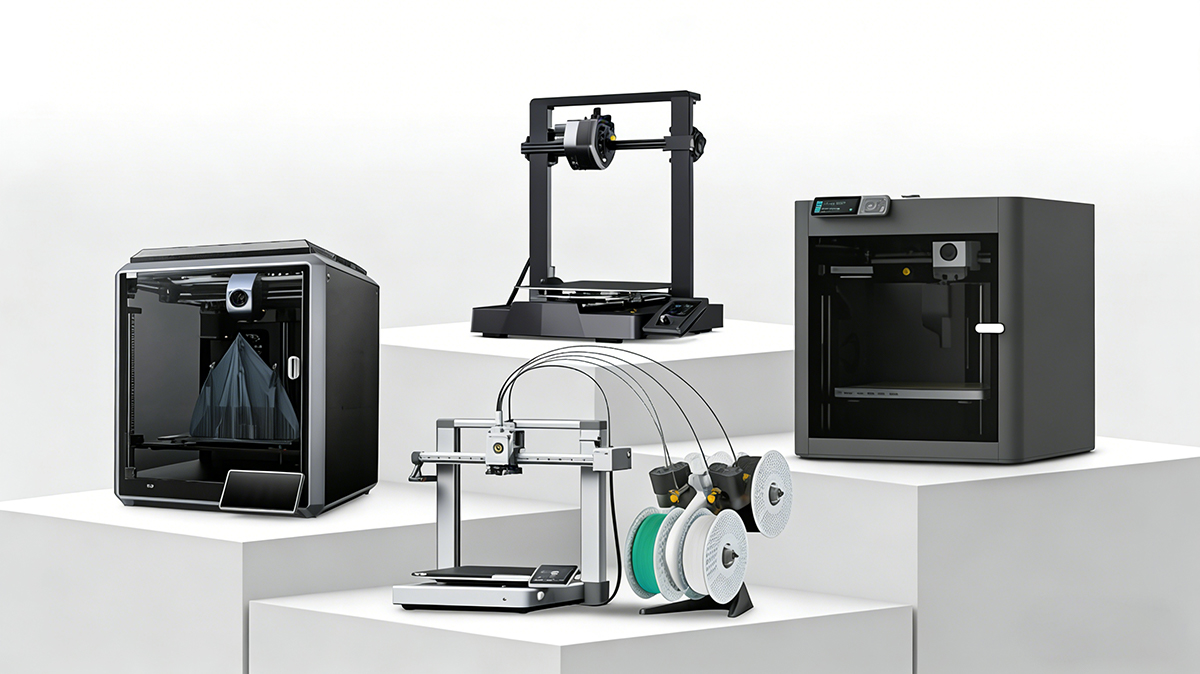
The company also collaborates with local makerspaces and design studios to host themed workshops like “3D Printing Cute IP,” where enthusiasts share printing tips, painting techniques, and design strategies, producing beloved Minions, Pikachu, Line Friends, and original cute characters using Standard PLA.
"Seeing creators turn their imagined cute characters into tangible 3D printed models brings an indescribable sense of accomplishment," the Product Director says.
Making Cute Creations Accessible
With optimized formula technology, flexible production systems, and strict quality control, the company has established a stable and efficient Standard PLA product line. Whether for professional designers’ IP prototypes or personal hobby projects, creators can rely on consistent results with this PLA filament for 3D printing.
Standard PLA lowers the barrier to creating cute IP characters, allowing more people to turn adorable designs into tangible, touchable 3D printed objects at a lower cost. At the same time, the company continues to expand its material lineup—including ABS and PETG—to meet diverse creative needs: ABS for sanding and painting, PETG for durable moving joints, and PLA for smooth, easy-to-use surface finishes.
"We believe that in the future, everyone can be a cute IP creator, turning Minions, Pikachu, or original characters into charming desktop companions," concludes the Product Director. "Our goal is to provide reliable materials so that creativity becomes simple. Whether it’s a Minion keychain for a friend or your first original figurine, Standard PLA ensures every cute idea is successfully 3D printed."