



NextShapes Hight Resolution 12K 3D Resin: Redefining Detail Standards in Jewelry and Anime Production
 2026.03.16
  NextShapes,HR 12K,3D Printing
  <1 minute


At the intersection of precision manufacturing and the cultural creative industry, consumers today demand an unprecedented level of detail in finished products. Whether it is the intricate openwork textures of jewelry or the subtle facial expressions of anime figures, achieving such results relies on breakthroughs in manufacturing precision. Traditional mold development cycles are long and expensive, while standard 3D resin materials used in 3D printing often fall short in fine detail and surface texture. The market urgently needs a material that supports high-quality 3D printing while enabling fast production and meeting demanding aesthetic expectations.
This is exactly the vision behind NextShapes’ Hight Resolution 12K Resin, a professional 3D resin developed for high-resolution 3D printing. As a company focused on high-performance photopolymer materials, NextShapes aims to bridge the final gap between high-resolution printers and flawless 3D printed products. Designed specifically for 405 nm LCD/DLP 3D printing systems, this red-wax-style resin delivers extremely sharp 3D printed models along with a unique matte surface finish, allowing creators to reproduce their designs with exceptional fidelity.

Read More >
A Service Provider’s Transformation Plan
The service provider featured in this story is located in a major manufacturing hub in East China. The founding team has more than ten years of experience in prototype model production. With the rise of digital manufacturing and 3D printing, they quickly recognized the strong potential of 3D printing for jewelry making and anime collectible markets.
Mr. Wang, the company’s founder, explained that although traditional lost-wax casting is a mature process, it becomes inefficient when dealing with complex geometries or extremely short delivery timelines. As a result, the team began experimenting with 3D printing technology and early 3D print workflows, initially using standard transparent and gray 3D resin materials.
“At the beginning, we were learning through trial and error,” Mr. Wang recalled. “When using ordinary 3D resin for high-detail 3D printing, we often saw flashing, noise, or visible layer lines. During post-processing, sanding could easily flatten delicate patterns. This was especially problematic for jewelry stone settings and anime characters’ hair strands. The failure rate of our 3D printed parts once became a major challenge.”
Mr. Wang emphasized that establishing the company in a manufacturing hub allows them to leverage the region’s mature industrial supply chain. Their goal is to build a localized production loop that integrates design, 3D printing, and casting or collectible production.
“We want to demonstrate that in a traditional manufacturing cluster, by introducing high-performance materials like those from NextShapes, we can not only serve local customers but also take premium 3D printing orders from across the country and even overseas.”

How to Use Hight Resolution 12K Resin for Printing
For this service provider, curing speed is important, but the most critical factors are detailed performance and usability in 3D printing. Before adopting NextShapes Hight Resolution 12K Resin, the team had tested several imported 3D resin products designed for high-precision 3D printing, but their high cost and complicated cleaning processes limited large-scale use.
Mr. Li, the company’s technical director, oversees the entire 3D printing workflow. He described the changes after introducing the new material.
“We had used some so-called ‘high-precision’ 3D resin materials before, but the surfaces of the 3D printed parts always had residue that was difficult to remove. Either the cleaning was incomplete, and the details became blurred, or the surface was too reflective and didn’t resemble wax. When clients reviewed the 3D printed prototypes, they felt the models lacked the right ‘texture.’”
After introducing NextShapes Hight Resolution 12K Resin, the team was first impressed by its excellent cleaning performance.
“Some red-wax-style 3D resin materials are very viscous, making it difficult for alcohol to penetrate the complex internal structures of 3D printed parts. That usually requires repeated cleaning cycles. With this material and our standard 3D printing cleaning process, uncured resin can be washed away easily. For batch processing jewelry trees and anime GK 3D printed models, the efficiency improvement is very noticeable.”
Another key advantage is the combination of matte surface finish and high precision, which significantly improved client satisfaction.
“When using 3D printing for jewelry making or anime prototypes, the biggest concern is the ‘plastic look.’ This 3D resin produces a matte surface that closely resembles traditional casting wax. Clients can hold the 3D printed model and immediately understand the design. With a 12K 3D printing system paired with this resin, even hair-strand textures and openwork patterns under 0.2 mm remain clearly defined.”
To achieve optimal results, the team also developed a standardized workflow. First, professional modeling software is used to optimize designs before 3D printing, especially for anime undercuts and jewelry stone settings. Next, they perform support tests and shrinkage verification using older 3D resin materials or fast 3D print modes. During production, models are carefully arranged to maximize the printer’s build platform. After 3D printing, the easy-clean properties of the material significantly shorten post-processing time.
“We chose this solution largely because of its usability and stability in 3D printing,” Mr. Li said, pointing to the tidy workspace. “Previously, the cleaning area was always sticky because leftover 3D resin was difficult to remove. Now the 3D printed parts are easy to clean, the post-processing workflow is simpler, and training new staff for 3D printing is much faster. What once required two or three people can now be handled by one person.”
To verify reliability, the team conducted rigorous testing. For jewelry applications, they evaluated performance during centrifugal casting and burn-out residue from 3D printed wax-like models.

“With some low-cost 3D resin materials we used before, residue remained in the plaster mold after burnout, which caused porosity in the metal casting. After several burn-out tests using 3D printed models produced with NextShapes resin, we found the ash content extremely low and the surface finish excellent. Our yield rate increased from about 70% to over 95%,” Mr. Wang added.
After introducing the resin, Mr. Wang believes the company has reached an important milestone.
“Our delivery standard is now very clear: when customers review their designs, the 3D printed resin model itself can already serve as a presentation piece. The matte finish and clear detail from high-resolution 3D printing allow clients to confirm designs directly before molding. That’s the production rhythm we aim for—maximum speed, maximum accuracy, and on-demand manufacturing.”
The team also noted that the resin’s high resolution and matte surface reduce the need for coating steps.
“Previously, we had to sand rough 3D printed prototypes and apply primer just to present a better visual effect to clients. Now the 3D printed parts already look great. Some anime customers even prefer the original matte color for painting because the surface provides good paint adhesion, eliminating the need for additional primer.”

Read More >
What’s Next for NextShapes
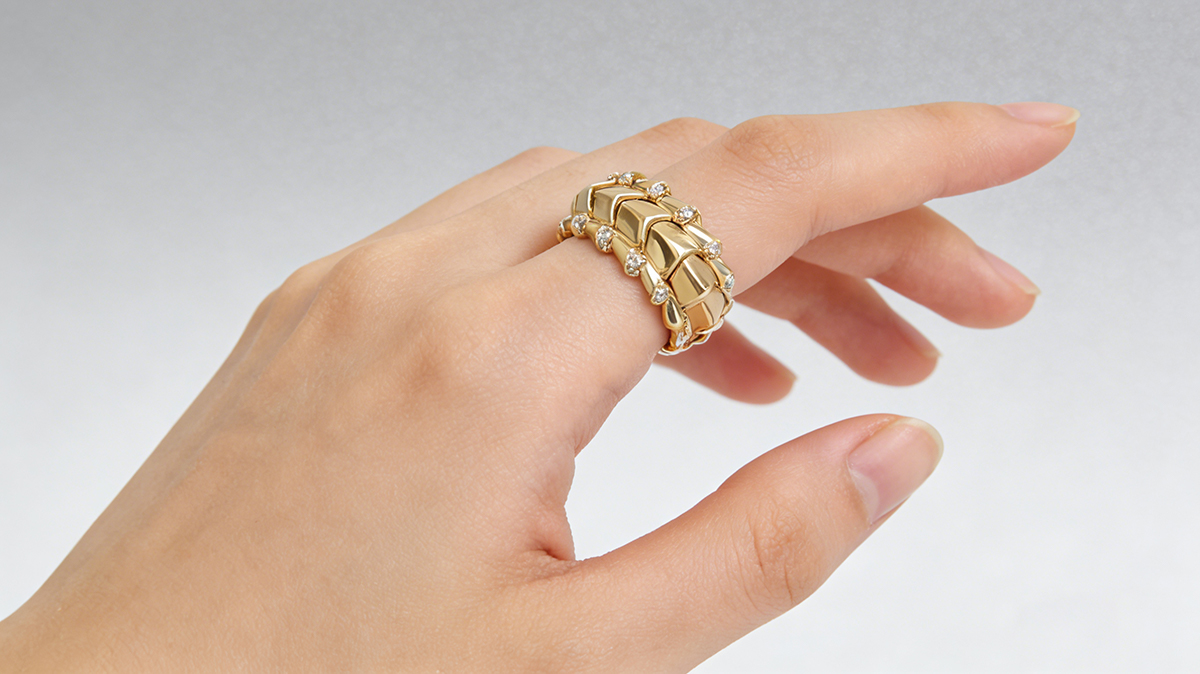
As Gen Z becomes a major consumer force, demand for personalized jewelry and collectible anime figures produced through 3D printing is rapidly growing. NextShapes hopes that products like Hight Resolution 12K Resin, a high-performance 3D resin, will help more service providers bridge the “last mile” between digital design and 3D printed products.
“We’re not just selling a bottle of 3D resin,” Mr. Wang said. “We hope that high-precision materials like this will change the way consumers access personalized products through 3D printing.”
He added: “In the future, whether it’s a limited-edition anime GK 3D printed figure or a custom engagement ring created through 3D printing for jewelry making, these products could be produced locally by responsive service providers like us—without long overseas waits or months of production time. That’s the real power of digital manufacturing.”