



How Advanced 3D Printing Materials Bridge the Gap Between Dental Education and Clinical Research
 2026.03.10
  NextShapes,Dental Model,3D Printing
  <1 minute


In universities and research institutions around the world, access to specialized equipment and materials often determines the pace of innovation. Dental schools face a unique challenge: they must simultaneously train the next generation of practitioners and push the boundaries of clinical research. For a long time, a tension has existed between educational needs and research priorities competing for limited resources. High-quality materials are often reserved for critical research projects, while students are left using suboptimal substitutes that cannot replicate real clinical conditions. This separation between education and research creates a gap between what students learn and the materials practitioners actually use.
At a leading dental school in Europe, a group of educators, clinical researchers, and practicing dentists collaborated to bridge this gap. They established a centralized digital dental facility serving both the school’s educational mission and research objectives. We interviewed the head of this center—a practicing restorative dentist with over a decade of experience in digital workflows—to understand how the right material choices enable them to effectively serve both students and researchers.

Read More >
Can you describe your institution’s digital dental philosophy?
Our center was founded as a digital dental hub to serve all departments within our dental school. We provide access to 3D printing technology, intraoral scanning, and CAD software for both educational purposes and research projects. Our mission is to ensure that every graduate experiences the same digital tools they will encounter in modern dental practices, while also supporting faculty in exploring research projects on new treatment modalities.
Both our undergraduate and postgraduate programs heavily rely on reliable 3D printing materials. The center provides a shared platform where educators and researchers can exchange knowledge, equipment, and expertise. Our vision is to create a seamless workflow: whether for teaching students or testing new clinical protocols, the same materials can be used throughout—from digital scanning to treatment planning to final model fabrication.
Why did you choose NextShapes Dental Model material for your facility?
Material selection is critical for us because we need a solution that meets multiple purposes simultaneously. After extensive testing, we selected the NextShapes 405 nm LCD/DLP Dental Model 3D resin as our primary material for model 3D printing.
The material’s performance characteristics perfectly match our dual mission. Its low shrinkage and high accuracy ensure that models maintain dimensional fidelity over time—whether used for research measurements or allowing students to practice fitting restorations. The material’s excellent detail reproduction captures even the finest edges of prepared teeth, which is essential for both 3D printing for education assessment and research validation.
Additionally, the material can be easily cleaned with standard isopropyl alcohol, making it practical for high-volume student 3D printing. For us, finding a material that does not require special handling or complex post-processing—and does not create bottlenecks in our workflow—was very important.
How many printers do you currently have in your facility?
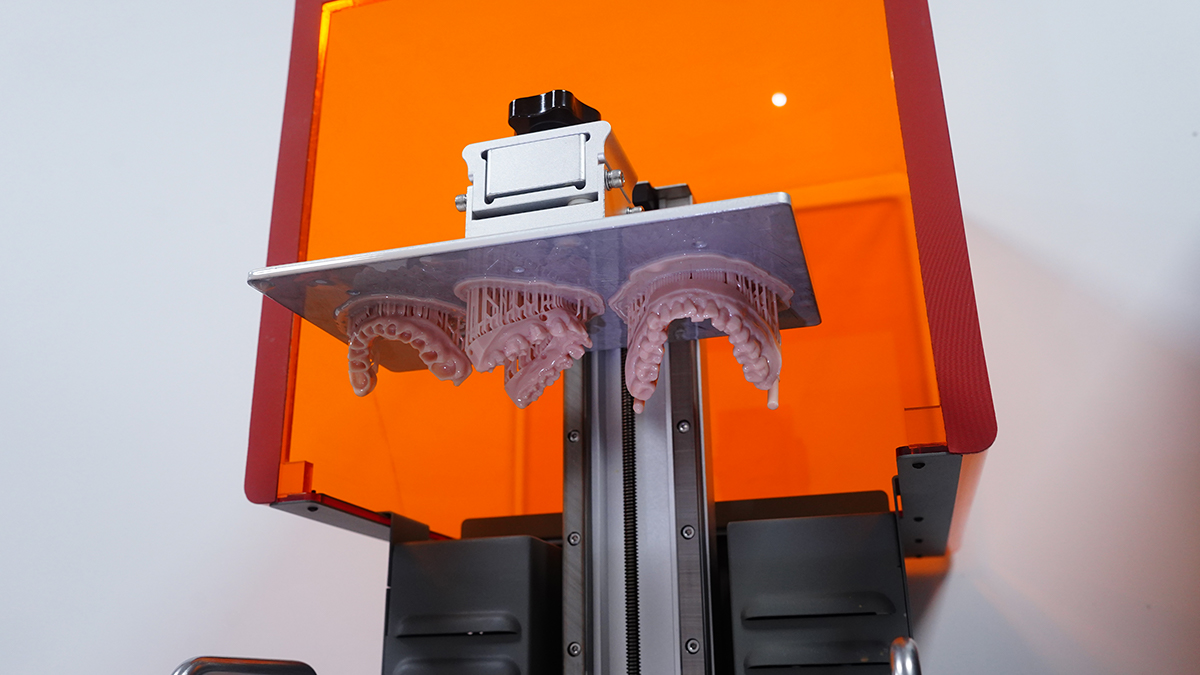
Currently, our facility operates eight LCD 3D printers dedicated to producing dental models. Four of these are specifically equipped with NextShapes Dental Model 3D resin for routine educational and research 3D printing. We found the material performs consistently across different printer platforms, providing flexibility in allocating printing resources.
Based on these positive results, we are expanding our capacity. Our goal is to have dedicated printers for each major application, with Dental Model material becoming the standard for all model-based workflows.

Read More >
What other equipment is integrated into your facility?
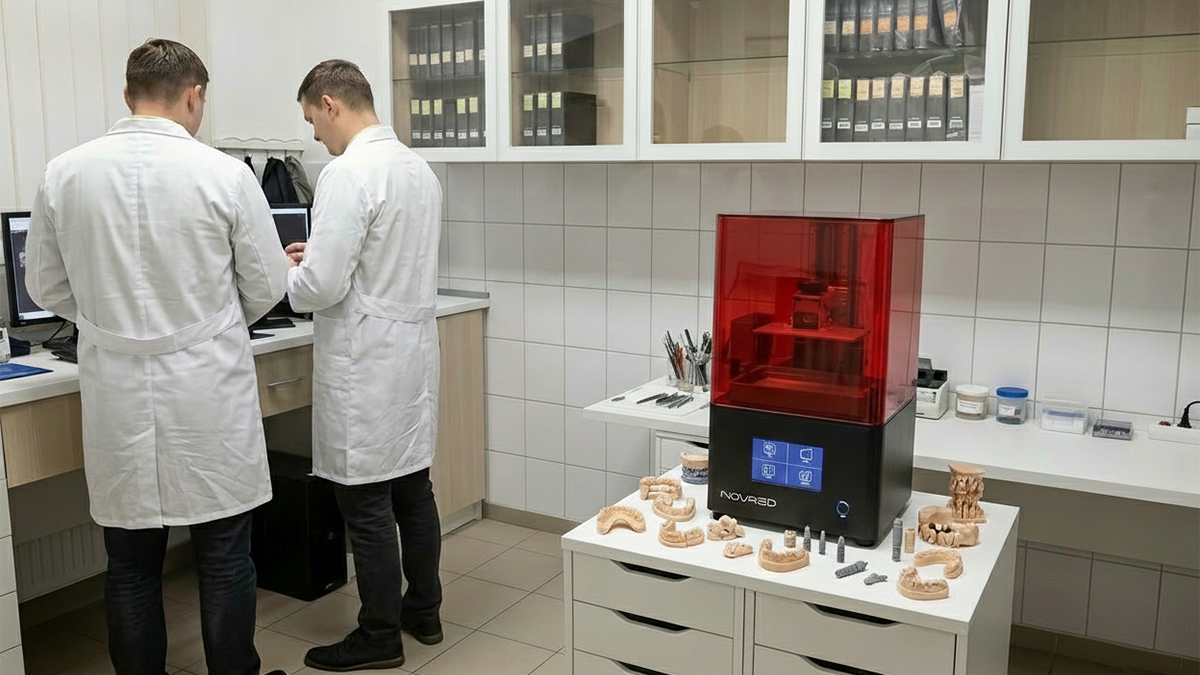
Our facility is equipped with a full suite of digital dental tools. We have multiple intraoral scanners from leading manufacturers, including several major brands, allowing students to gain experience with different scanning technologies. Dedicated workstations with industry-standard CAD software are maintained for treatment planning and model preparation.
Beyond the printers themselves, we have invested in post-processing equipment, including automated washing and curing units to ensure consistent results. We also collaborate with the university’s engineering department, granting access to advanced measurement tools for research projects, such as digital microscopes for surface analysis and coordinate measuring machines for dimensional verification.
The integration of all this equipment allows students to experience the complete digital workflow—from patient scanning to final model—just as they would in a modern dental practice.
How is 3D printing used in your educational programs?
Recently, we introduced a comprehensive digital dentistry course in the last two years of the undergraduate program. This course is built around hands-on projects with real cases.
The projects are divided into two phases. The first phase focuses on foundational knowledge—students learn the principles of digital scanning, mesh processing, and print preparation through classroom instruction and guided lab sessions. The second phase is entirely case-based, with student teams planning and executing complete treatment workflows. Each team receives anonymized patient data and must progress from the initial scan to the final model, making clinical decisions throughout.
Throughout this process, the Dental Model material has proven invaluable. Its consistent and predictable handling properties allow students to learn on a professional-grade material, and the quality of the 3D printed models is sufficient for realistic restorative practice.
Why is it essential for students to work with these specific materials?
Digital workflows are no longer optional in modern dentistry; they are becoming the standard of care. Most dental practices now incorporate some form of digital technology into daily operations, and this trend is accelerating. To prepare our students for real-world clinical practice, they must work with the same materials they will encounter in their future careers.
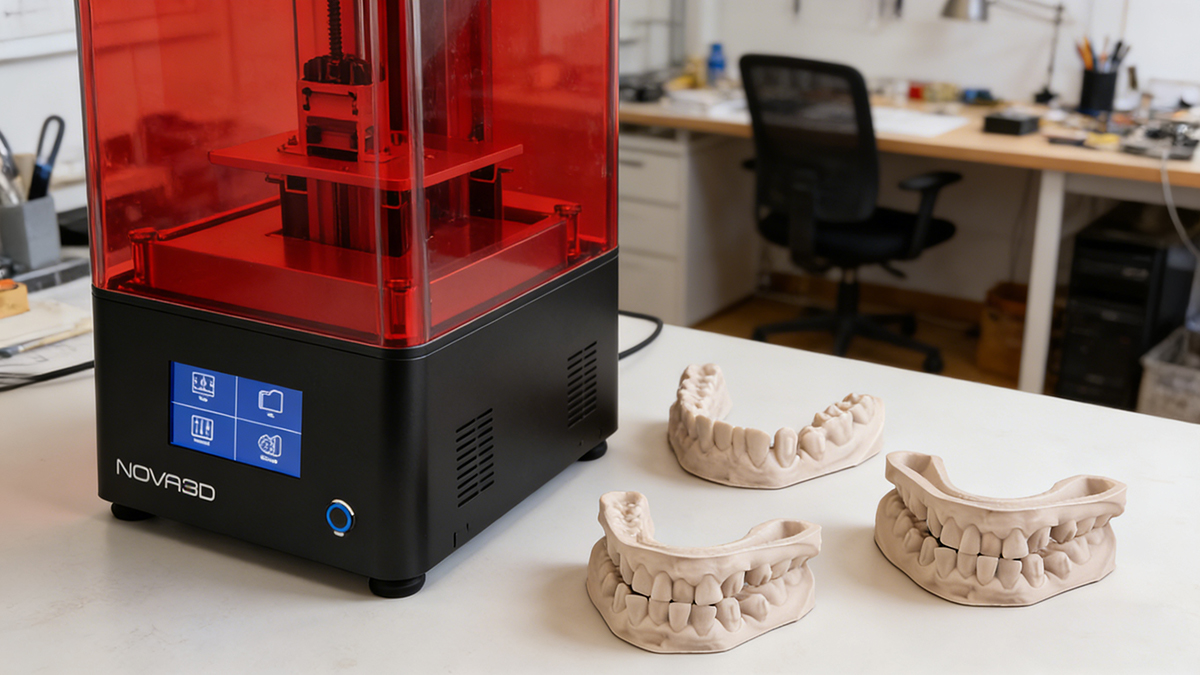
NextShapes Dental Model material represents professional-grade materials that students will actually use in practice. Its accuracy ensures that when students evaluate their own tooth preparations on 3D printed models, they are seeing a true representation of their work. Its dimensional stability ensures that models can be preserved for the entire semester without distortion, which is critical for longitudinal assessment of student progress.
For research projects, having reliable and consistent materials is equally crucial. When testing new treatment methods or evaluating preparation techniques, we need to eliminate material variability as a confounding factor. The predictable performance of this material allows us to focus on the clinically relevant variables.
In today’s dental education, integrating professional-grade materials that students will encounter in clinical practice is indispensable. The gap between teaching materials and clinical reality can no longer be maintained.

Read More >