



Standard Pro 3D Resin: Redefining Speed and Creativity in Eyewear Design
 2026.01.20
  NextShapes,Standard Pro,3D Printing
  <1 minute


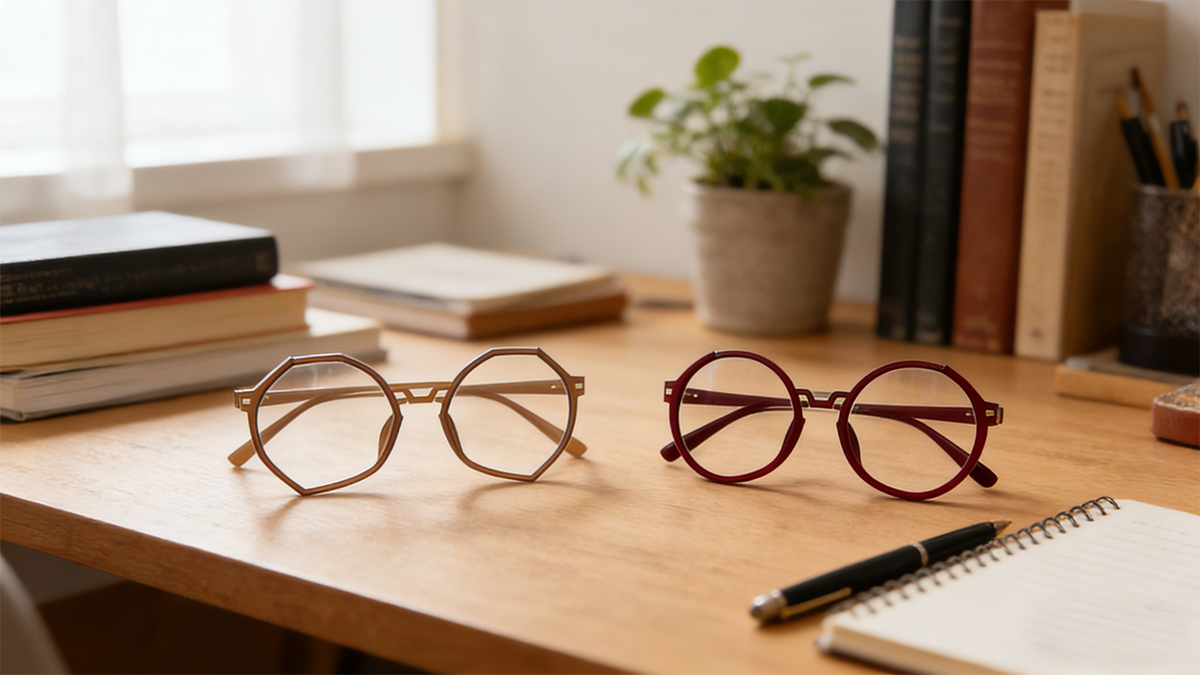
In today’s pursuit of individuality and fashion, eyeglasses have evolved from being mere vision correction tools to essential accessories that express personal style. However, the traditional eyewear frame design and manufacturing process is lengthy, with samples often taking weeks or even months to develop, severely restricting designers' creative iteration and market response speed. Every detail—color, material, fit, weight—affects both the wearing experience and aesthetic appeal. Designers yearn for a way to quickly transform the lines in their minds into tangible objects, a way that both showcases exquisite appearance and withstands practical testing.
This is where NextShapes Standard Pro material shines. A leading digital design studio is using this specially optimized photosensitive resin for 405nm wavelength LCD/DLP 3D printers to revolutionize the design and prototyping process of eyewear frames. What they offer is no longer just blueprints but fully functional, 3D printed prototypes that can be tried on, evaluated, and even closely resemble the final product’s feel. This innovative approach to 3D Printing enables unprecedented creative freedom.

Read More >
A Design Studio’s Creative Transformation Plan
It all began with a simple pain point: the beautifully designed frames on paper always faced a “seller’s show” vs. “buyer’s show” gap during the prototyping phase. Traditional CNC machining or mold manufacturing is costly and time-consuming, making the design team hesitant to iterate in the early stages.
“We realized that true design innovation cannot remain on rendered images alone,” the studio’s co-founder and design director said in an interview. “Designers need to touch, bend, and try on their creations to feel the weight and fit. But traditional prototyping methods—whether time cost or economic cost—prevent us from performing adequate physical validation early on. Adopting LCD 3D printing technology was our breakthrough.”
The studio serves brands and independent designers seeking uniqueness and rapid time-to-market. The eyewear industry is undergoing a personalization revolution, and the foundation of this revolution is fast, precise, and cost-effective prototyping capabilities enabled by advanced 3D print materials.
“We chose to focus on digital design and 3D printing because we wanted to shorten the path from idea to product,” the design director added. “Our goal is not just to make samples but to establish a ‘design-to-manufacture’ process where inspiration is no longer constrained by manufacturing bottlenecks. Here, design is created, validated, and seamlessly moves toward production.”
How They 3D Print Eyewear Frames Ready for Try-On
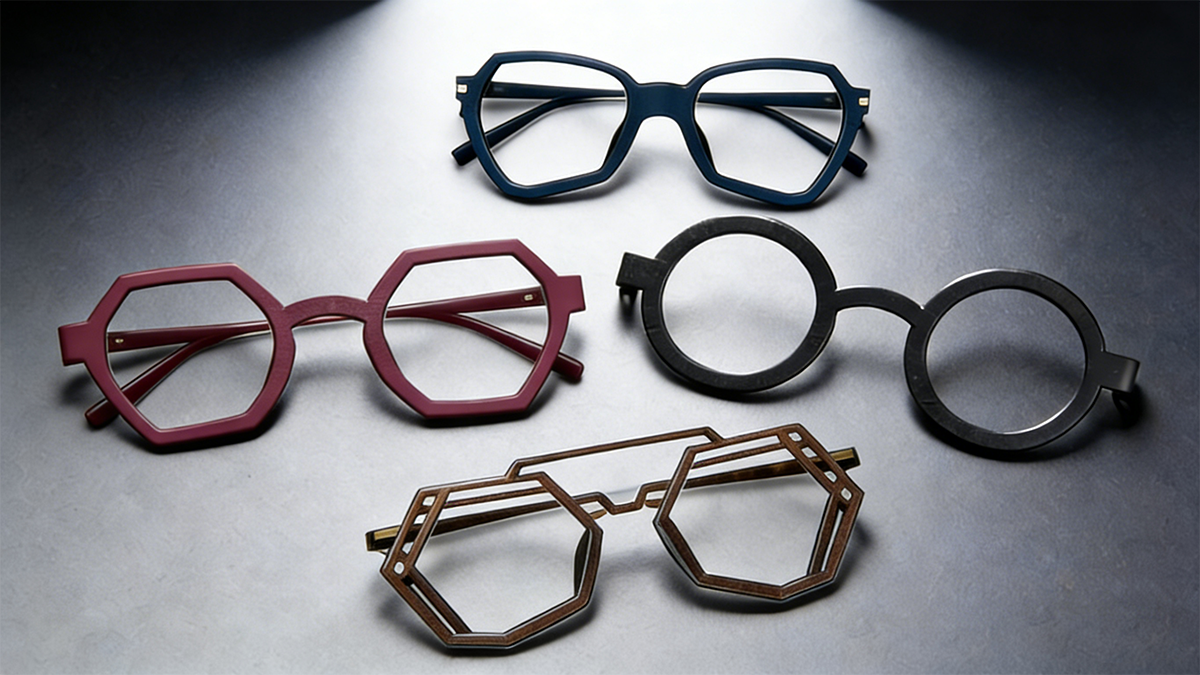
For this studio, quickly and high-quality materializing ideas while maintaining design freedom and sustainability is a core need. The combination of Standard Pro 3D resin and LCD 3D printing technology has become their answer.
Before adopting Standard Pro, the team had tried other photosensitive resins and outsourced traditional processes. “We used some generic resins to create visual models, but they were either too brittle to withstand the pressure of wear or had rough surfaces, failing to present the premium feel that high-end eyewear requires. Outsourcing CNC completely lost the advantage of rapid iteration,” the design director recalled.
The features of Standard Pro material perfectly matched their needs:
- Aesthetic and Tactile Feel: The 3D printed parts have a remarkably smooth surface, requiring almost no polishing to achieve an injection-molded, refined feel, greatly improving the quality of the prototypes.
- Mechanical Properties: The excellent strength and hardness of this 3D resin prevent fragile temple arms and delicate hinge structures from breaking during try-on and adjustments. Its inherent flexibility simulates the slight deformation of final products, making the wearing experience more realistic.
- Color and Efficiency: With nearly ten color options, designers can directly evaluate their 3D printing models during the prototyping stage, accelerating decision-making. More importantly, the fast forming speed means that designs created on the same day can be tested with several color versions the next day.
“Standard Pro has changed our workflow,” the design director explained. “The high hardness and strength make our 3D printed prototypes no longer ‘fragile.’ Designers can confidently hand them to models or clients for try-ons. The easy cleaning post-processing feature also saves a lot of time.”
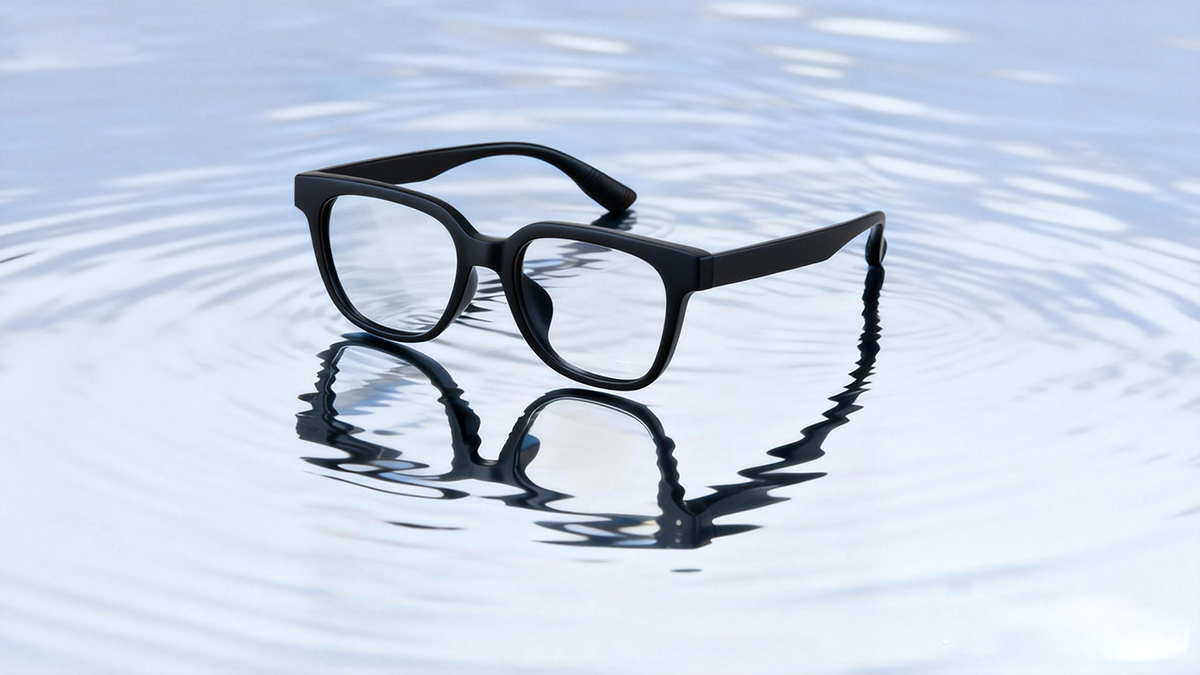
They have established an efficient workflow: after completing 3D modeling, the design team uses print management software to intelligently arrange the build platform, allowing multiple different frame designs to be printed simultaneously. After printing, the supports are easy to remove, and after simple cleaning and secondary curing, the prototype is ready.
“Sustainability is also a consideration,” the design director emphasized. “Traditional subtractive manufacturing generates a lot of waste, while 3D print precision is additive, using only the required material. The rapid prototyping iterations themselves prevent significant waste from late-stage modifications. Using the right 3d print materials for the right purpose is responsible design.”

Read More >
Looking Ahead: The Future of Eyewear Design

The studio’s vision goes beyond accelerating prototyping. They are using this technology to explore the future form of eyewear design.
“We’re evolving from a mere service provider to a ‘creative empowerment platform,’” the design director envisioned. “The speed and expressiveness enabled by Standard Pro allow us to explore designs with clients that were previously unimaginable: complex hollow structures, lightweight one-piece frames, and artistic models with special textures. 3D printing brings ‘wild imagination’ to life quickly.”
They see several key future directions:
- Personalized Customization: Combining 3D scanning to offer consumers truly personalized frames that fit the contours of their faces. The rapid production capability of LCD 3D printing makes small-batch customization economically feasible.
- Functional Integration: Designing cavities within frames to integrate smart modules, allowing quick prototyping of assembly feasibility and wearability balance using durable 3D printing models.
- Education and Industry Innovation: Partnering with design institutions to ensure students' creativity is not limited by traditional manufacturing processes, allowing them to engage with the most cutting-edge 3D Print technology and 3D print materials from an early stage.
“Ultimately, we hope to eliminate the gap between creativity and reality,” the design director concluded. “Materials like NextShapes Standard Pro are key building blocks to bridge this gap. It’s not just about printing a frame; it’s about 3D printing new possibilities, enabling designers to create more freely and allowing everyone to quickly find the eyewear that best represents their individuality. This is the change we want to bring—to make individuality instantly visible and tangible.”