



Redefining Efficiency: How NextShapes Precision Model 3D Resin Revolutionizes Shoe Mold Development
 2026.01.16
  NextShapes,Precision Model,3D Printing
  <1 minute


As the fashion industry’s demand for rapid iteration and personalized customization grows, the traditional footwear sector faces significant efficiency challenges in mold development. At NextShapes, we frequently engage with leading footwear brands and manufacturers on how to inject digital agility into their core development processes. The long waits for physical samples and metal molds, high costs, and compromises on the fidelity of complex design details are driving many companies to actively seek superior rapid manufacturing solutions like 3D printing.
Key Breakthrough: Accelerating the Design Verification Loop
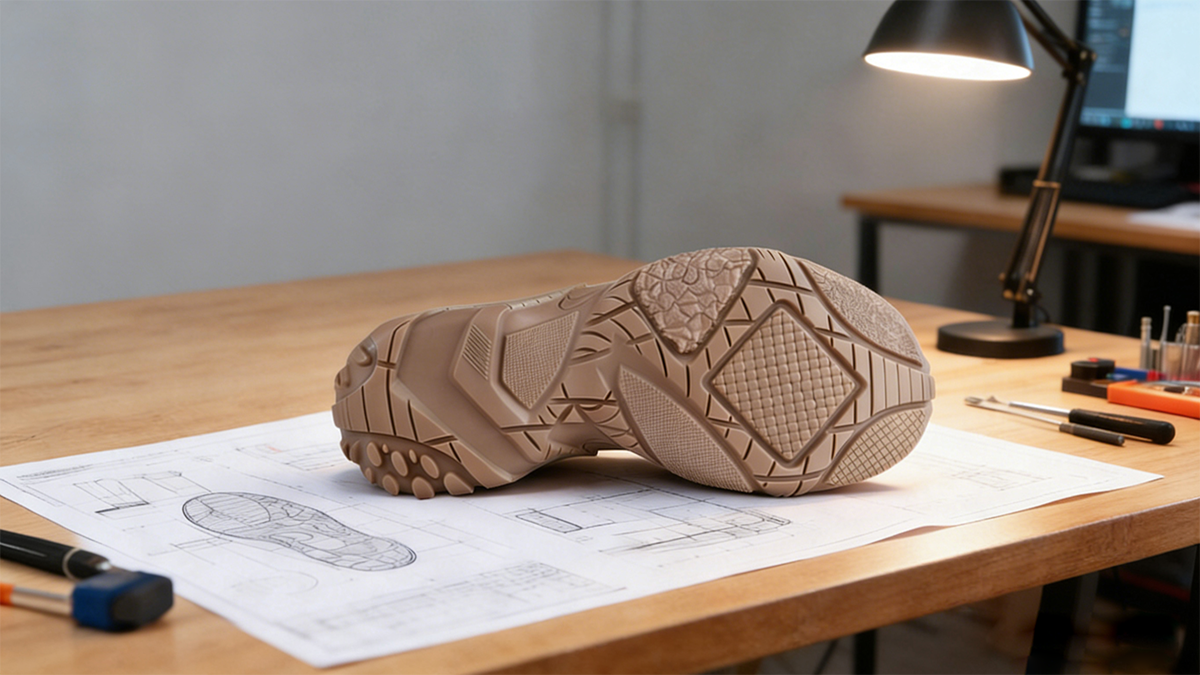
When brands face dual pressures from seasonal new product launches and customized orders, accelerating the closed loop from design to validation has become a critical competitive advantage.
In the traditional model, moving a new shoe design from blueprint to a production-ready mold requires multiple rounds of physical sample modifications and precise machining of metal molds—a lengthy cycle with high costs. For brands pursuing design innovation and rapid market response, this not only slows time-to-market but also limits creative potential. Fortunately, a high-performance material based on 355nm SLA 3D printing technology is emerging as a key solution: the NextShapes Precision Model Brown Shoe Mold Resin, a dedicated 3D resin for this purpose.
Selecting the right rapid prototyping material for the specific needs of shoe mold development and design validation is the first step in the digitalization journey. With its exceptional dimensional stability and superb detail reproduction capability, Precision Model Resin accurately transforms digital designs into high-fidelity physical models. These can be used directly for functional verification, fit testing, and even small-batch trial production. Adopting this material can significantly shorten design validation cycles, reduce mold development risks and costs, and grant design teams greater creative freedom to calmly respond to rapid market changes.
Over the past year, NextShapes’ industry application team has collaborated with numerous innovative footwear companies to deeply integrate Precision Model Resin into their front-end development workflows. Below, we reveal the tangible value it creates through a typical case study.
Client Practice: An Application Case of Precision Model

“After introducing Precision Model Resin, our average development and validation cycle for a single 3D printing shoe style was shortened by 40%. The change it brought in precision and surface quality is revolutionary.”
– Senior R&D Manager, a renowned sports brand
Manager Li is the R&D lead for a technology-driven sports brand based in East China. The brand has long been committed to leveraging new technologies to optimize product development.
Previously, they relied on outsourced CNC machining or standard photosensitive resins for sample shoes. The former was costly and slow, while the latter fell short in dimensional stability and detail durability. As the brand decided to expand its high-end custom product line, the need for rapid, precise prototype validation became urgent. After evaluating various solutions, Manager Li ultimately chose a system utilizing NextShapes Precision Model Resin and SLA 3D printing technology.
Shoe molds or last masters printed with Precision Model Resin can be used directly for detailed assembly testing, design evaluation, and even as masters for silicone molding. It’s important to understand that achieving the highest fidelity requires matching with standardized post-processing procedures—proper cleaning, post-curing, and surface treatment are key to unlocking its full performance. In practical applications, the material has demonstrated excellent weather resistance. Its brown color facilitates detailed inspection, and the cured surface is smooth and dense, significantly reducing the need for post-printing sanding. The overall efficiency gains have markedly optimized the development cost structure.
“Our Precision Model series aims to help manufacturing enterprises break through prototype validation bottlenecks, accelerate time-to-market, reduce trial-and-error costs, and provide a solid, reliable physical basis for design innovation and market decisions through appearance and performance that rival final products.”
– NextShapes Materials Team
Optimized for 355nm high-precision industrial-grade SLA equipment, this 3D resin’s outstanding mechanical properties and fatigue resistance make it suitable not only for design validation but also for direct use in small-batch flexible production, such as limited-edition soles, complex-texture upper components, or high-quality art masters. For brands involved in both product development and innovative marketing, this material enables a seamless transition from prototype to short-run production, expanding the value proposition of rapid manufacturing. The core advantage of the entire 3D print workflow lies in its high predictability and consistency.
Even when focused solely on last and mold master production, Precision Model Resin demonstrates a remarkable return on investment. Manager Li’s team calculated that due to the significant reduction in repeated modifications and outsourcing costs, the newly introduced 3D printing system and material proved its value within the first key projects. The department, which is responsible for developing dozens of new shoe styles annually, has now integrated in-house 3D print capabilities into its standard operating procedures and considers Precision Model Resin a core pillar of its internal rapid validation process.
Facing intense market competition and consumers’ stringent demands for design details, investing in a high-performance digital rapid prototyping solution was a strategic decision for Manager Li and his team. Now, the team can conduct physical verifications earlier and more frequently, increasing design success rates. It also provides the marketing department with high-quality product display samples, enhancing the brand’s high-tech image. This ability to rapidly convert digital models into physical samples is precisely where the value of modern 3D printing technology shines.
“With this system, we can now complete the production of test-ready sample shoes in multiple versions within a week, starting from drawings. Designers’ ideas can ‘materialize’ quickly, our decision-making is faster, and we respond to the market more agilely.”
– The Brand’s Footwear Product Director
Manager Li suggests that even medium-sized footwear manufacturers or independent design studios, if they have a steady annual demand for new style development, should consider building similar internal rapid validation capabilities. He believes, “The key lies in calculating hidden costs—time costs, opportunity costs, and communication overhead. The sense of control and flexibility brought by internal 3D printing capabilities often far exceeds the hardware investment.” He also emphasizes the importance of integrating the new process with existing design and production management systems to maximize technological dividends.
Manager Li advises peers that when adopting such solutions, it’s necessary to establish corresponding material safety data management and post-processing operational guidelines, and to train relevant technical personnel. This is crucial for ensuring the long-term stability and consistency of printed models. With standardized processes in place, Manager Li considers industrial-grade solutions based on SLA 3D printing technology to be operationally stable and easy to integrate into modern product development workflows. Establishing a robust framework is the first step to success for any team looking to explore the potential of 3D printing shoe applications.
Stepping into the Future of Agile Manufacturing
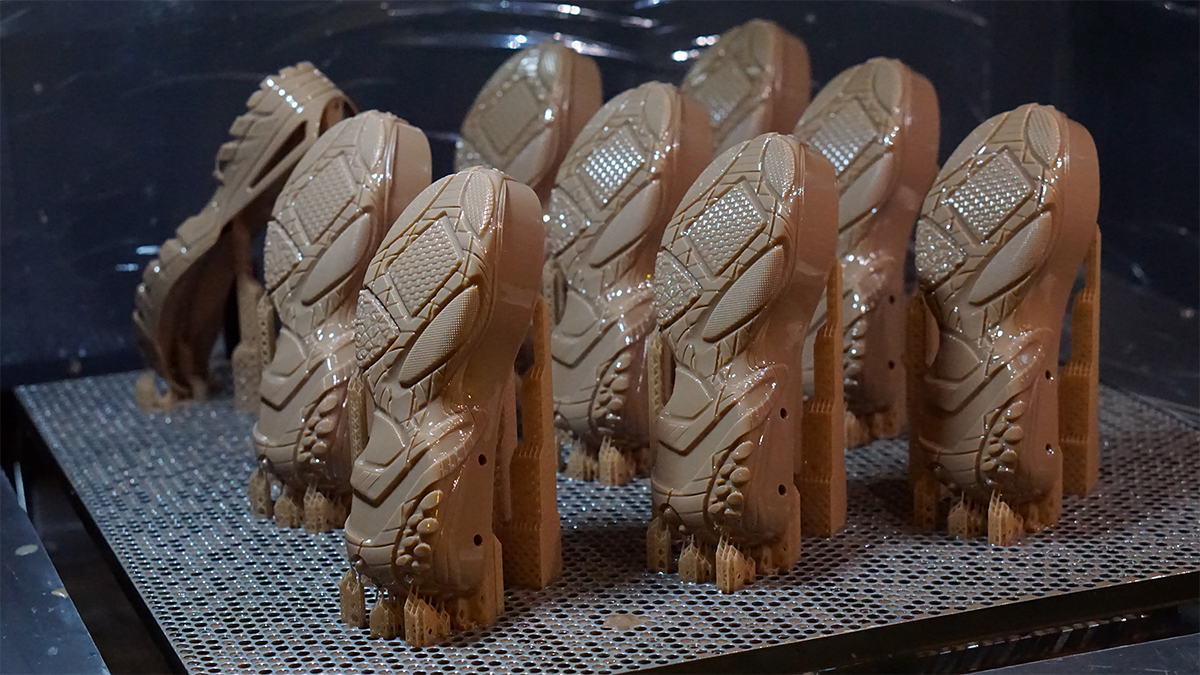
NextShapes is committed to empowering the digital transformation of manufacturing through advanced material science, making the bridge between creativity and manufacturing stronger and faster. We understand that in consumer goods industries like footwear, speed and precision are vital. Adopting a high-precision 3D resin engineered for final performance is an inevitable choice for any brand that aims to lead in design and win in the market through agile manufacturing.
If you are interested in NextShapes Precision Model Resin or other high-performance industrial materials for 3D printing, please visit the NextShapes official website for technical datasheets and application cases.