


How High-Precision Dental Resin is Transforming Workflows in Oral Healthcare Institutions
 2025.12.24
  NextShapes,Dental Model,3D Printing
  <1 minute


Faced with growing patient demands and the increasing requirements for precision medicine, a leading domestic dentistry chain institution long struggled with efficiency bottlenecks inherent in the traditional dentistry model production. Relying on outsourced plaster models meant waiting for days, incurring high per-unit costs, and often dealing with insufficient accuracy in complex cases, leading to restoration remakes and compromised patient experience. This situation underwent a fundamental transformation after the institution's technical decision-makers introduced an in-house 3d printing solution based on NextShapes Dental Model, leveraging LCD 3d printing technology.
"We were pursuing not just morphological similarity, but functional precision and efficiency," recalled the institution's technical lead, reflecting on the initial motivation for adoption. Since establishing their own digital model center and integrating 3d printing into their operations, they have successfully reduced model acquisition time from days to just hours, significantly lowered per-unit costs, and achieved the ability to provide uniquely customized models for every patient using LCD 3d printing technology.

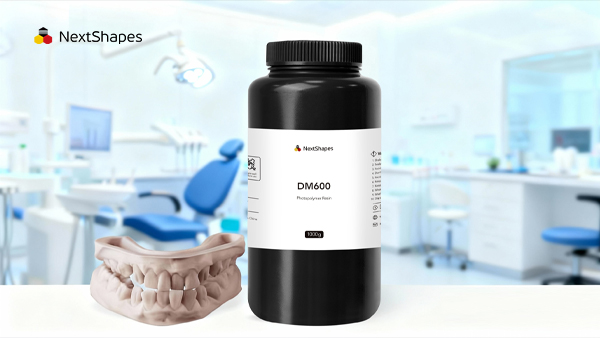
How Are Digital Models Integrated into the Core Treatment Workflow?
For this institution, 3D-printed dental models are now deeply embedded in its core operations, serving as a critical bridge between digital planning and physical treatment. On the clinical front, prosthodontists use them for physical validation of pre-surgical designs, while implantologists utilize them for precise fitting rehearsals of surgical guides. In the orthodontics department, the models have become the physical gold standard for visually confirming each step of clear aligner treatment plans, greatly enhancing the intuitiveness of doctor-patient communication. In the lab, they serve as high-precision bases for directly fabricating various restorations, ensuring accuracy from the very source.

"The fidelity of the model is the cornerstone of a successful restoration. The clear presentation of details, especially in the marginal areas, allows us to preemptively avoid many potential issues," commented a senior prosthodontist involved in the project.
Why Was This Material Chosen?
"The fidelity of the model is the cornerstone of a successful restoration. The clear presentation of details, especially in the marginal areas, allows us to preemptively avoid many potential issues," commented a senior prosthodontist involved in the project, emphasizing the importance of 3d printing models.
"Accuracy and dimensional stability are our lifelines," the technical lead emphasized, explaining the choice. "The models printed with this material show extremely high fidelity in reproducing key anatomical structures and preparation margins. Long-term observation confirms that their dimensions remain stable over time, which is crucial for medical record archiving and long-term tracking."


"It transformed our communication model with patients. In the past, explaining complex orthodontic plans relied solely on images on a screen. Now, we can physically show patients predictive models of key treatment stages created using 3d printing. The material's skin-like color is highly realistic, and details like gingival texture are vivid. This makes the treatment process transparent, tangible, and understandable, leading to unprecedented levels of patient comprehension and cooperation."
— Head of the Orthodontics Department
The material's superb processability also earned high praise from the technical team. Its consistent 3d printing success rate and excellent post-processing experience significantly boosted overall production efficiency. "Support removal is very smooth, and the model surface is remarkably clean after washing. This saves us a great deal of time and effort, allowing us to focus more on the craftsmanship itself," added the manager of the technical center.
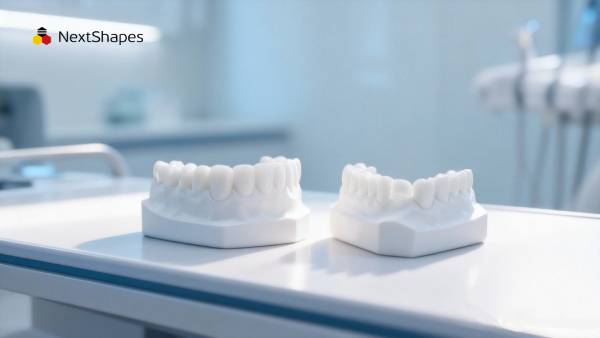
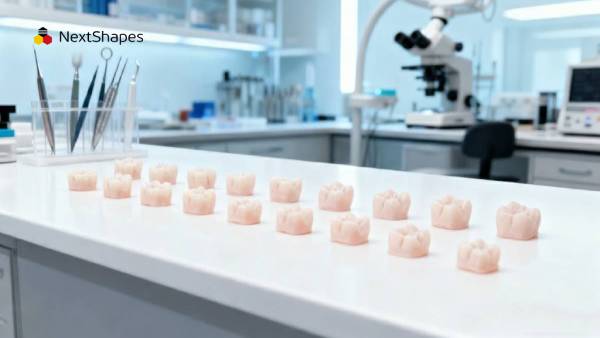
How Was Their Digital Workflow Constructed?
The institution established an efficient, standardized digital production process:
Step 1: Seamless Digital Integration
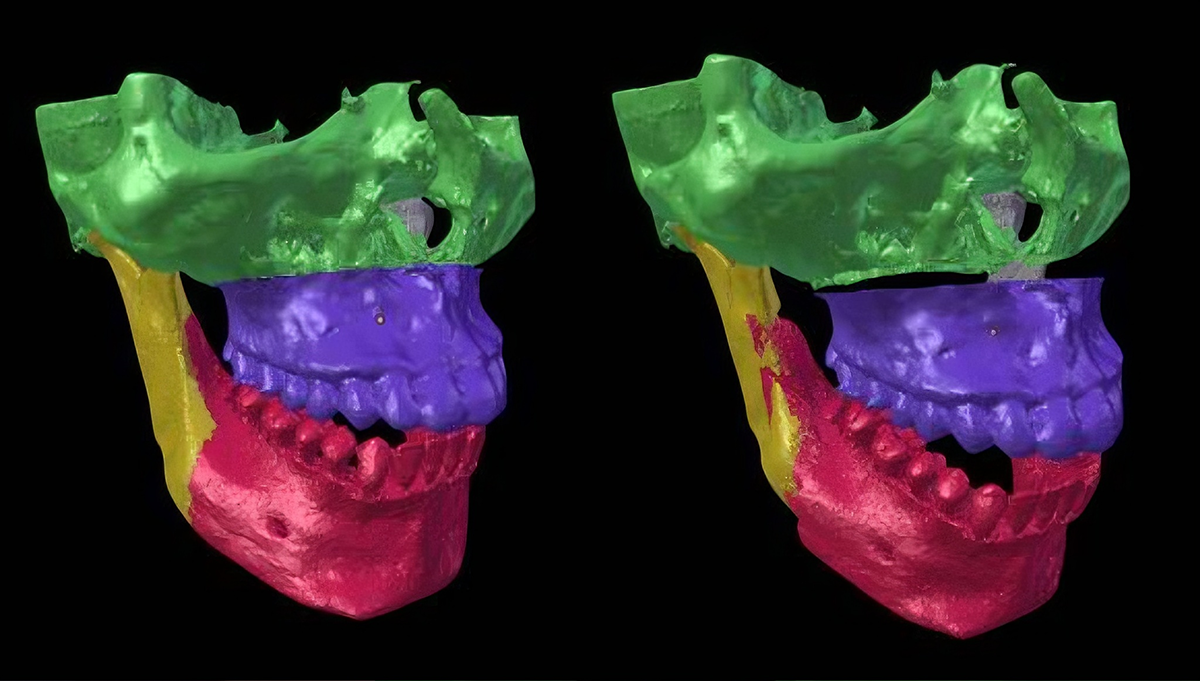
Patients' intraoral scan data is transmitted directly to a central server via a secure network. Designers use professional software for model preparation and nesting. The entire process is fully digitalized, eliminating physical casting and enabling seamless integration with 3d printing.
Step 2: Centralized, Scalable Production
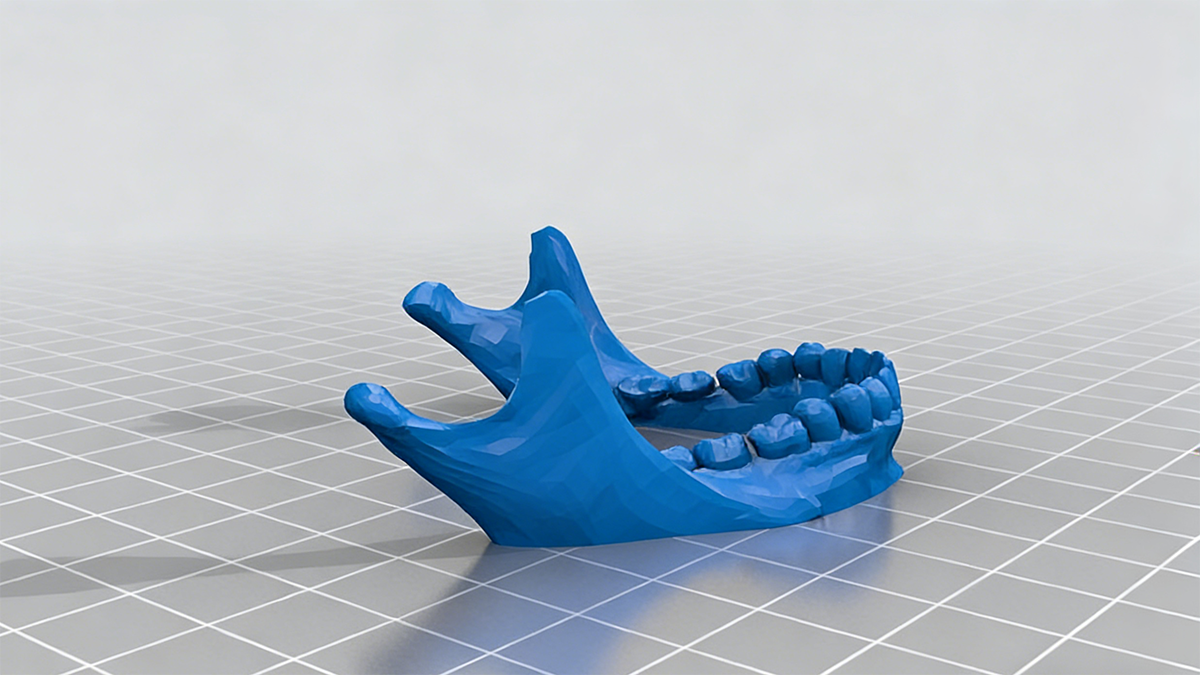
The prepared files are sent to a centrally located print station. Utilizing high-efficiency 3d printing equipment combined with NextShapes 3d resin, they achieve batch production of multiple models in a single run, maximizing equipment utilization and meeting the centralized demand of clinical operations.
Step 3: Standardized Post-Processing and Quality Control
They implemented a rigorous Standard Operating Procedure (SOP) for post-processing: Print completion → Automated washing → Support removal → Secondary precision wash → Light curing → Final quality inspection. Each model undergoes a dimensional check against the original design data before delivery, ensuring zero error.

Results Achieved and Future Outlook
By adopting NextShapes 3d resin for in-house model manufacturing, the institution has achieved significant operational improvements: Model turnaround time has been reduced from days to hours, the clinical adaptation rate of restorations has increased markedly, and communication for orthodontic treatment plans, along with patient satisfaction, have reached new levels. Most crucially, they have successfully built their own core competency in the field of digital dentistry.

"This is more than just an upgrade in materials or equipment; it represents a profound transformation of our entire service model towards precision, digitization, and patient-centric care," concluded the technical lead. "Looking ahead, we plan to expand this capability platform to more digital application scenarios, continuously driving service innovation through 3d printing."